
Creating a Winning Guest Post Portfolio That Brings Clients
A Guest Post Portfolio is your SEO credibility deck. It's a curated collection of your published guest posts, organized to demonstrate your value, niche...
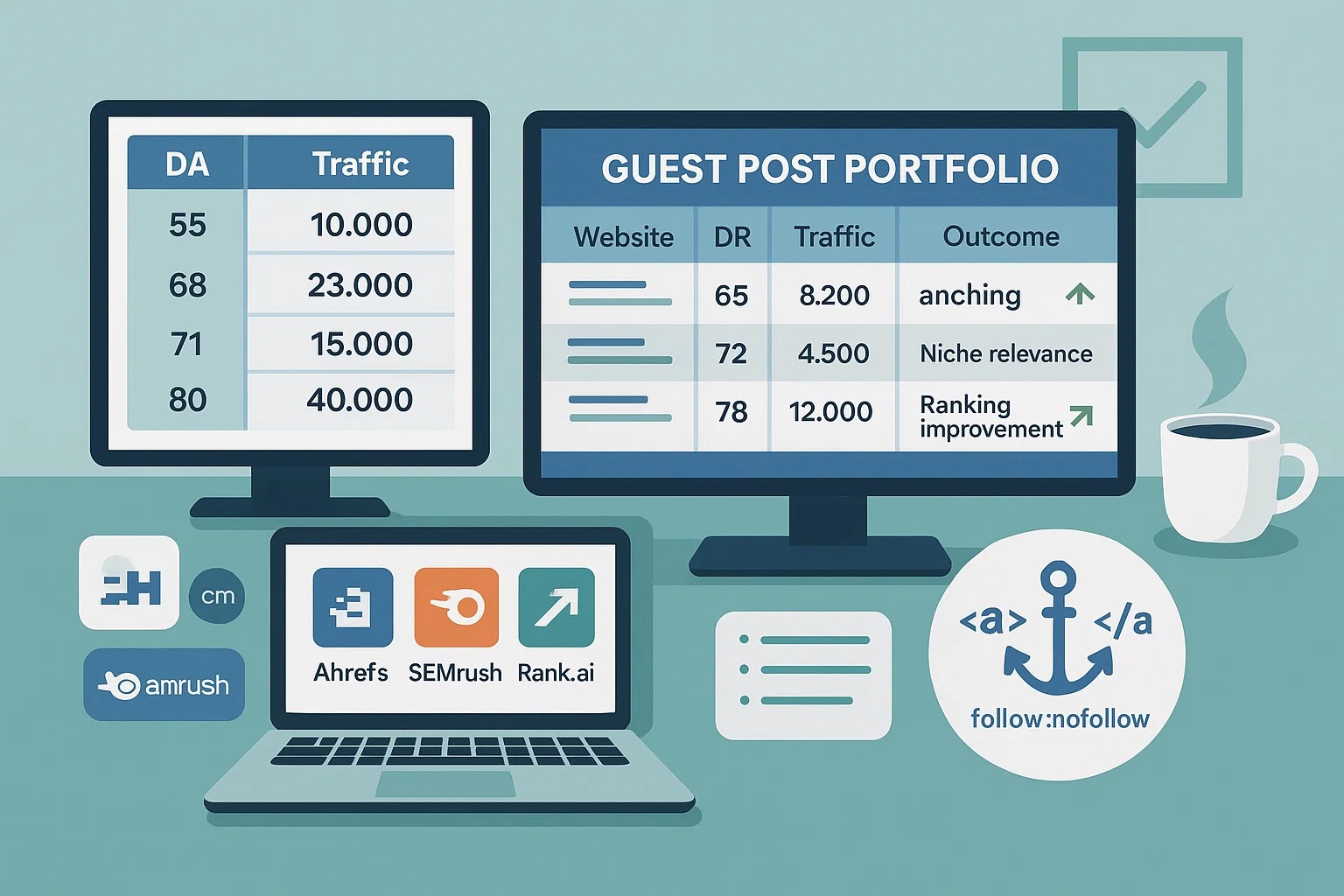
A Guest Post Portfolio is your SEO credibility deck. It's a curated collection of your published guest posts, organized to demonstrate your value, niche relevance, backlink quality, writing authority, and industry influence. A well-built portfolio is essential for attracting clients and establishing trust.
What Is a Guest Post Portfolio?
A Guest Post Portfolio is a collection of your published guest posts across authoritative websites. It is organized in a way that showcases:
Domain Authority (DA/DR): Demonstrates high-value platforms
Niche Relevance: Ensures your content aligns with client needs
Anchor Text Strategy: Displays effective backlink placement
Traffic Metrics: Shows the visibility of your posts
Follow/NoFollow Links: Balances the backlink profile
Indexation Status: Ensures the links are indexed by Google
Portfolio Foundation - Core Elements
Key Elements to Include:
Element | Description | Why It Matters |
Domain Authority (DA/DR) | Measures the strength of a site’s backlink profile | Shows you're posting on high-value platforms |
Niche Relevance | How closely the content aligns with your client's niche | Boosts topical authority and prevents spammy links |
Anchor Text Strategy | The clickable text in backlinks | Impacts rankings and creates a natural link profile |
Traffic Metrics | Estimated monthly visits (Ahrefs, SimilarWeb) | Indicates the visibility and engagement of the link |
Follow/NoFollow | Whether the link passes authority or not | Balances link profile, providing diversity |
Indexation Status | Whether the post is indexed by Google | Ensures effectiveness of backlinks |

Advanced Strategy: Building the Portfolio
Step 1: Define Your Guest Post Identity
Before building your portfolio, you need to decide on your specialization. Choose a clear identity that fits your strengths and market demands:
Generalist Guest Poster: Targets many industries, often at lower pricing
Niche Specialist: E.g., "SaaS SEO Backlink Expert" or "eCommerce Link Builder"
Authority Builder: Only works with DR 70+ sites, charges premium rates
Pro Tip: A niche-focused identity helps you command higher retainers and gain client referrals more easily.
Step 2: Choose Target Websites
Create a matrix using the RANK-METHOD Framework to select quality sites for guest posts.
Factor | Weighting (1-5) | Notes |
Relevance | 5 | Must align with niche/industry |
Authority (DA/DR) | 4 | Target DR 40+ (Tier 1) or DR 20-40 (Tier 2) |
Natural Traffic | 5 | 1K+ monthly visits minimum |
Knowledge Graph | 3 | Brand/author presence matters for trust |
Metrics (TTF/CTR) | 4 | Time-to-first-link & Click-through potential |
Use the following tools to extract this data:
Ahrefs or SEMrush
Rankar.ai for verified guest post data
Step 3: Optimize for Anchor Text & Link Placement
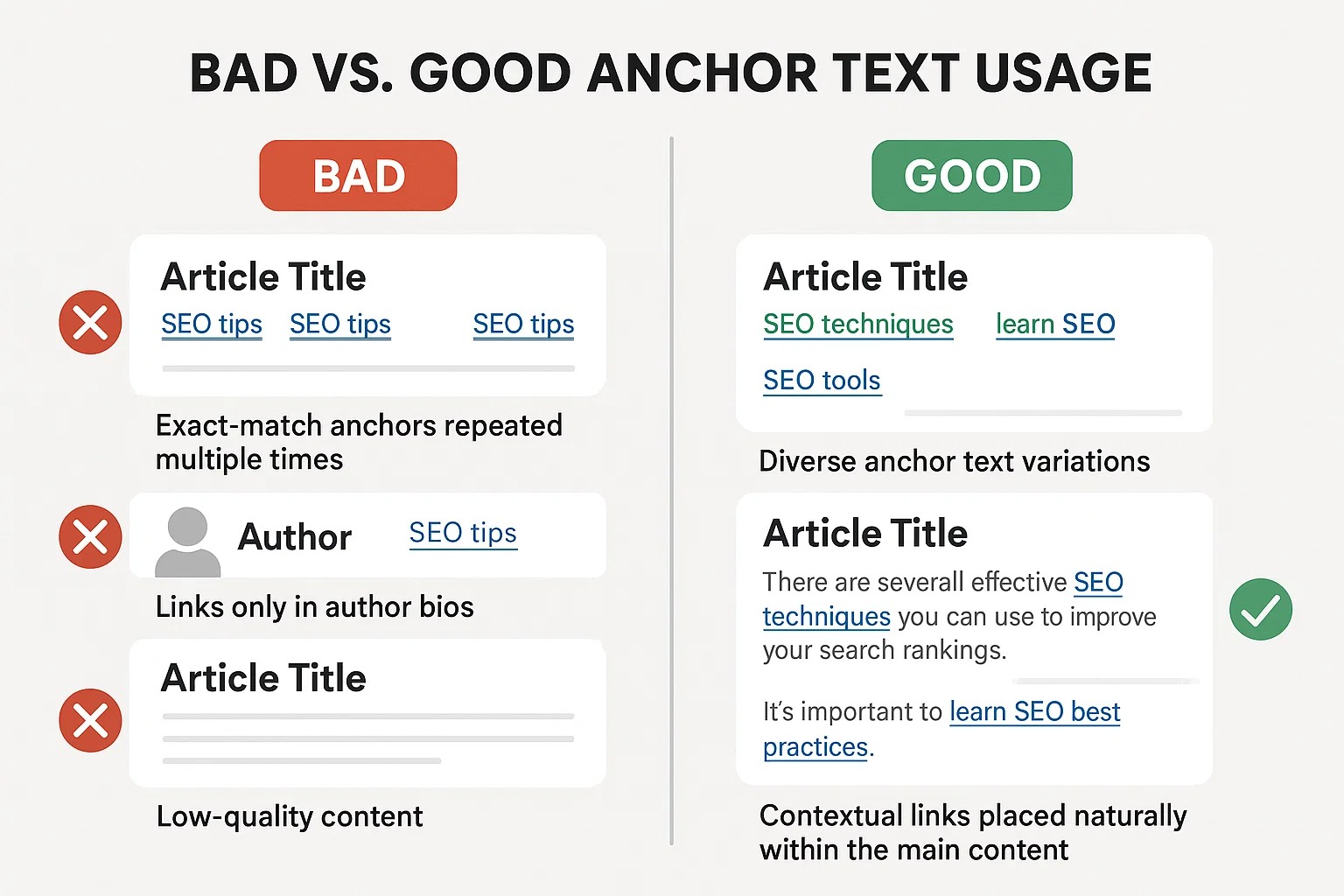
A strong portfolio will display both anchor diversity and contextual link placement.
What Not to Do
Avoid using exact-match anchors repeatedly
Don't place links only in author bios
Avoid linking from low-quality or spun content
What to Do
Use a mix of branded, keyword+brand, and natural anchor variations
Place contextual links within the first 300 words or core section of the content
Use supporting links (to other authoritative sites) for natural flow
Step 4: Document and Display Your Portfolio
Structure your portfolio in a funnel-optimized way. Here's how to display each post:
Website | Domain Rating | Traffic | Link Type | Anchor Text | Niche | Outcome |
68 | 25K | DoFollow | “best email tools” | SaaS | +12 ranking spots | |
42 | 8.9K | DoFollow | “AI SEO strategies” | Marketing | Indexed & traffic spike |
Tools to use for creating and showcasing:
Notion or ClickUp for visual boards
Google Sheets + Data Studio for dashboards
Rankar.ai-generated profile for verified, detailed posts
Industry Best Practices
Best Practices to Follow:
Tiered Link Building: Combine guest posts with supporting tier-2 links to maximize authority.
Geo-Targeted Posts: If your client operates in a specific region (e.g., the USA), target regionally relevant sites.
Mix Free & Paid Placements: Use a combination of organic and paid guest posts to ensure balance.
Monitor Indexation: Use Google Search Console or IndexCheckr to track the indexing status of your guest posts.
Update Old Links: If links are removed, always request for them to be restored or replaced.
Case Study - Freelance Guest Posting Agent → Agency
Client: Adeel Khan (Freelancer → Rankar.ai Agency Partner)
Approach:
Initially, Adeel had 12 guest posts in mixed niches.
He used Rankar.ai to find free guest post sites and RankWriter AI for content creation.
Tracked link performance through Rankar.ai dashboard.
Results:
Signed 5 clients at $400/month retainers
Scaled operations to 3 agents within 4 months
Focused on eCommerce and SaaS niches
Built a visual guest post portfolio with screenshots, DR, links, and outcomes
Used LinkedIn and Fiverr profiles to attract leads
Actionable Insights & Checklist
Here’s what you should aim for in your portfolio:
Build a minimum of 10 posts in your niche
Ensure at least 5 are on DR 40+ sites
Use AI for content, but humanize for tone and formatting
Track indexation and ranking impact
Create a Notion/Google Sheets portfolio
Add screenshots of live URLs and Before/After rankings
Send your portfolio link in proposals, Upwork/Fiverr profiles, or cold outreach
7. Bonus - AI Tools That Can Help
Tool | Use Case |
AI content creation, website finder, backlink tracking | |
Surfer SEO | Optimizing guest post content |
DataForSEO API | Metrics scraping for thousands of domains |
Screaming Frog | Indexation status and outbound links |
ChatGPT with Web Browsing Plugin | Content research and competitor mapping |