
How to Pitch Websites for Guest Posting Effectively: A Step-by-Step Guide
Guest posting is not just about writing great content; it’s also about convincing website owners to publish your posts. For Level 2 students, mastering the art...

Guest posting is not just about writing great content; it’s also about convincing website owners to publish your posts. For Level 2 students, mastering the art of pitching is essential to secure placements, build credibility, and start earning from your guest posts. This guide covers strategies, templates, and tips to pitch websites effectively.
Understanding the Purpose of a Guest Post Pitch
A guest post pitch is your proposal to a website owner, editor, or content manager. Its purpose is to:
Demonstrate the value you can provide to their audience.
Highlight your expertise and credibility.
Convince them that your content aligns with their site.
Secure approval for your guest post submission.
Pro Tip: Think of your pitch as a mini-sales proposal — it should clearly show benefits to the website owner.
Research Your Target Websites
Before pitching, research your target websites thoroughly:
Identify Relevant Sites: Look for blogs within your niche or industry.
Check Audience Engagement: Analyze traffic, comments, and social shares to ensure the site has an active audience.
Review Existing Content: Understand the type of content they publish, tone, and style.
Confirm Guest Post Guidelines: Many websites have “Write for Us” pages or guidelines for guest submissions.
Tools to Help:
Ahrefs / SEMrush: Check domain authority and traffic
Rankar.ai: Find verified guest posting sites.
Google Search Operators: "write for us" + [niche] or "guest post guidelines" + [industry].
Crafting the Perfect Subject Line
Your subject line is the first thing the website owner sees. A strong subject line increases your email open rate.
Tips for Effective Subject Lines:
Keep it short and clear.
Highlight the value or benefit: e.g., “Guest Post Idea to Boost Your Blog Traffic.”
Personalize when possible: e.g., “Article Idea for [Website Name] Readers.”
Avoid spammy words like “Free,” “Earn,” or “Make Money” in the subject line.
Pro Tip: Curiosity-driven subject lines often perform best but remain professional.
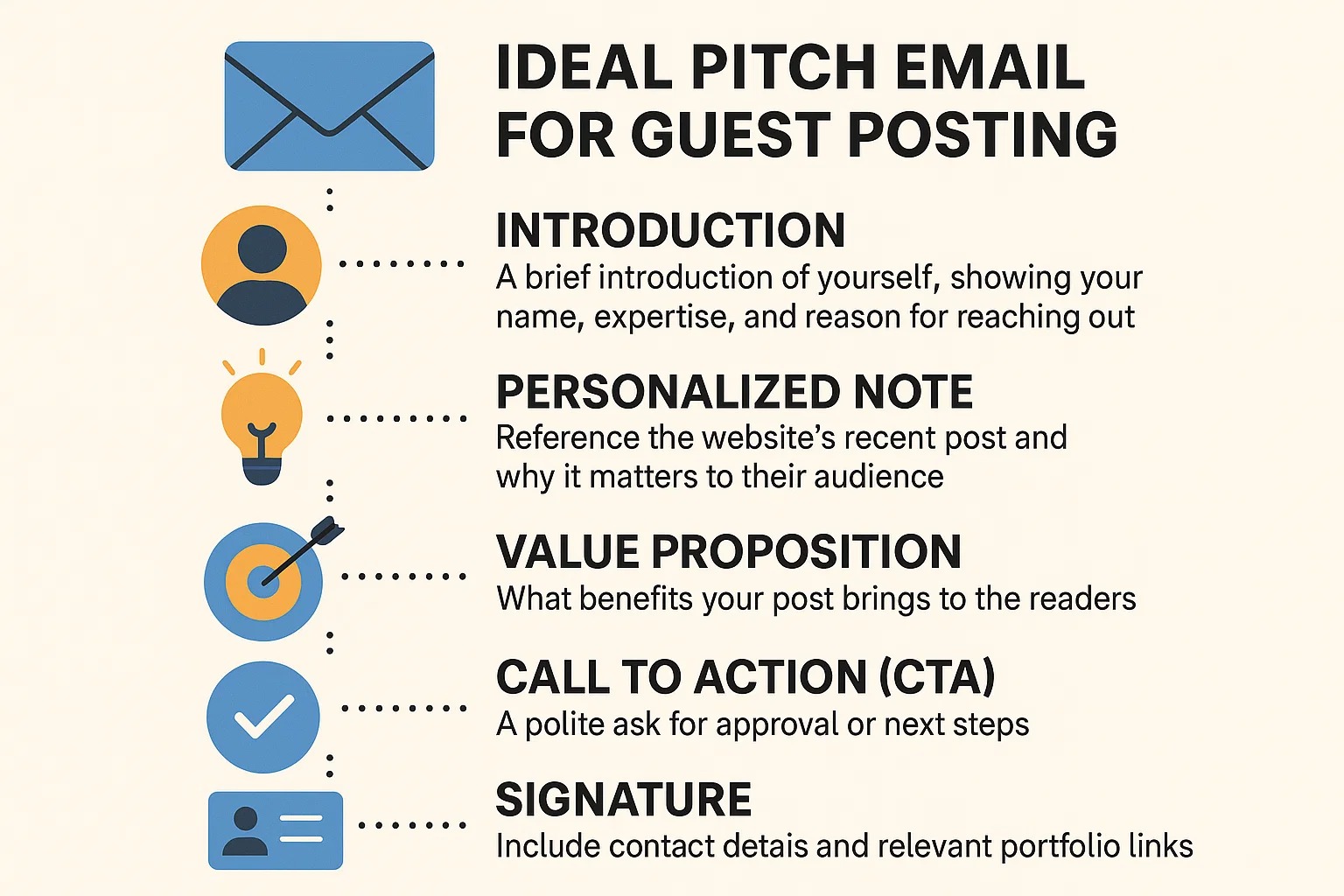
4. Structure Your Pitch Email
A professional pitch email should be concise, persuasive, and structured:
Introduction:
Introduce yourself briefly.
Mention your expertise or relevant experience.
Personalized Note:
Reference a recent article or post from their site.
Show that you understand their audience and content style.
Value Proposition:
Explain how your guest post benefits their readers.
Highlight your topic idea(s) and why it’s relevant.
Call-to-Action (CTA):
Ask politely if they’d like you to submit the full draft.
Provide clear next steps.
Signature:
Include your name, website, portfolio link, and any social proof.
Example Template:
Subject: Guest Post Idea for [Website Name]
Hi [Editor Name],
I enjoyed your recent article on [Topic]. It inspired me to suggest a guest post idea tailored for your audience.
Here’s the topic I propose: "[Proposed Title]"
This post will [benefit the readers: educate, solve a problem, provide actionable tips].
If you’re interested, I can send the full draft for your review.
Best regards,
[Your Name]
[Website / Portfolio / LinkedIn]
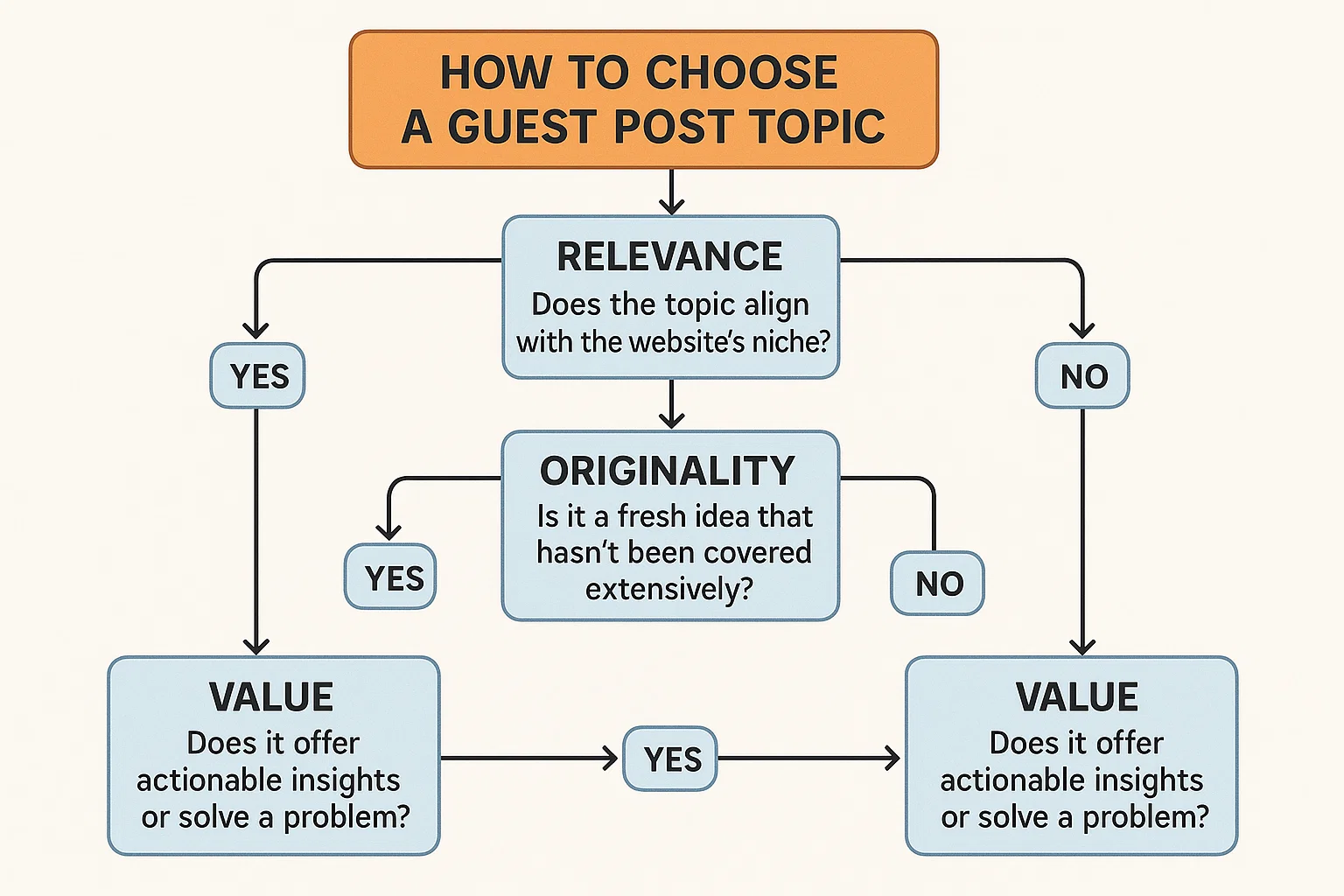
Choosing Your Guest Post Topics
The topic you pitch is crucial to acceptance. Keep these points in mind:
Relevance: Align with the website’s niche and audience interests.
Originality: Avoid topics already extensively covered on the site.
Value-Driven: Ensure the post provides actionable insights or solves a problem.
SEO-Friendly: Use keywords naturally to add SEO value for both you and the website owner.
Pro Tip: Research competitor articles to find gaps you can fill with your content.
Personalization and Professionalism
Generic pitches often get ignored. Personalization increases your chances of approval:
Address the editor by name.
Reference specific posts or sections of their website.
Mention why their audience will benefit from your post.
Maintain professionalism in tone and formatting:
Proper grammar and spelling.
Clear and concise sentences.
Respectful and polite language.
Follow-Up Strategy
Most website owners do not respond to the first email. A polite follow-up can significantly improve your acceptance rate:
Wait 3–5 days after the initial email.
Keep the follow-up short and reference your original email.
Add a small incentive or additional topic idea if appropriate.
Limit follow-ups to 2–3 times to avoid being pushy.
Example Follow-Up:
“Hi [Editor Name], just checking if you had a chance to review my guest post proposal. I’d be happy to send a draft or provide more topic ideas.”
Tracking Your Pitches
As your guest posting efforts grow, track every pitch:
Spreadsheet Columns: Website, Editor Name, Date Sent, Topic, Response, Notes, Status.
CRM Tools: Use tools like Snov.io, HubSpot, or Pipedrive to manage outreach.
UTM Links: Track traffic and engagement if the post is published.
Tracking helps identify successful outreach strategies and areas for improvement.
Common Mistakes to Avoid
Sending generic, copy-paste pitches.
Ignoring the website’s guest posting guidelines.
Overpromising or misrepresenting your expertise.
Following up too aggressively or too often.
Pitching irrelevant topics or low-value content.
Scaling Your Pitching Process
Once you master effective pitching:
Build a list of 20–50 target websites in your niche.
Automate outreach with tools like Pitchbox, Mailshake, or GMass.
Refine your pitch templates based on response rates.
Offer multiple topic ideas to increase acceptance chances.
Pro Tip: The more you pitch with a well-researched, personalized strategy, the more paid guest posts you’ll secure.
Conclusion
Mastering the art of pitching is essential for any Level 2 guest posting student. By researching target websites, crafting personalized and value-driven pitches, following up strategically, and tracking your outreach, you can consistently secure guest post opportunities and grow your income.
Remember: quality and relevance are more important than quantity. Focus on building relationships, delivering value, and refining your pitch over time. With practice, your guest post pitching skills will become a key driver of your success.
