
How to Audit Guest Posting Efforts Across 10+ Projects: A Technical Blueprint for SEO Agencies
Guest posting at scale can become chaotic without the right auditing framework. Managing more than 10 client projects simultaneously means tracking hundreds of...
Guest posting at scale can become chaotic without the right auditing framework. Managing more than 10 client projects simultaneously means tracking hundreds of live links, vetting domains, monitoring performance KPIs, and ensuring alignment with Google’s evolving quality guidelines. This guide is a technically rigorous, advanced-level blueprint to help agencies and enterprise SEO teams audit and manage their guest posting initiatives across multiple projects effectively.
Defining the Audit Framework
What Is a Guest Posting Audit?
A guest posting audit is a comprehensive review and evaluation of all activities related to placing content and backlinks on external websites to improve SEO rankings, brand visibility, and referral traffic.
Audit Objectives:
Ensure each backlink is live, indexed, and dofollow (where intended)
Validate the quality of each linking domain (authority, relevance, trustworthiness)
Confirm topical relevance and keyword optimization
Monitor traffic impact and ranking uplift
Evaluate agent/contractor performance
Uncover toxic links or over-optimization issues
Audit Frequency:
Monthly for active projects
Quarterly for legacy links
Core Audit Metrics and Definitions
Metric | Definition | Tool/Source |
|---|---|---|
DR (Domain Rating) | SEO authority metric by Ahrefs | Ahrefs API |
DA (Domain Authority) | SEO authority metric by Moz | Moz API |
TF/CF | Trust Flow & Citation Flow by Majestic | Majestic SEO |
Link Index Status | Whether Google has indexed the link | Google Index API, Screaming Frog |
Anchor Text Distribution | Ratio of branded, exact match, partial match, and generic anchors | Custom Audit Spreadsheet |
Spam Score | Likelihood the site is flagged as spammy | Moz or SEMrush |
Referring Domains | Number of unique domains linking to client’s site | Ahrefs, SEMrush |
Organic Traffic of Host Site | Estimated monthly visits | SimilarWeb, Ahrefs |
Step-by-Step Technical Audit Process
Step 1: Consolidate All Links
Export links from internal tracking tools, agents, and spreadsheets
Deduplicate and group by project/client
Store in a structured database (e.g., Airtable, PostgreSQL)
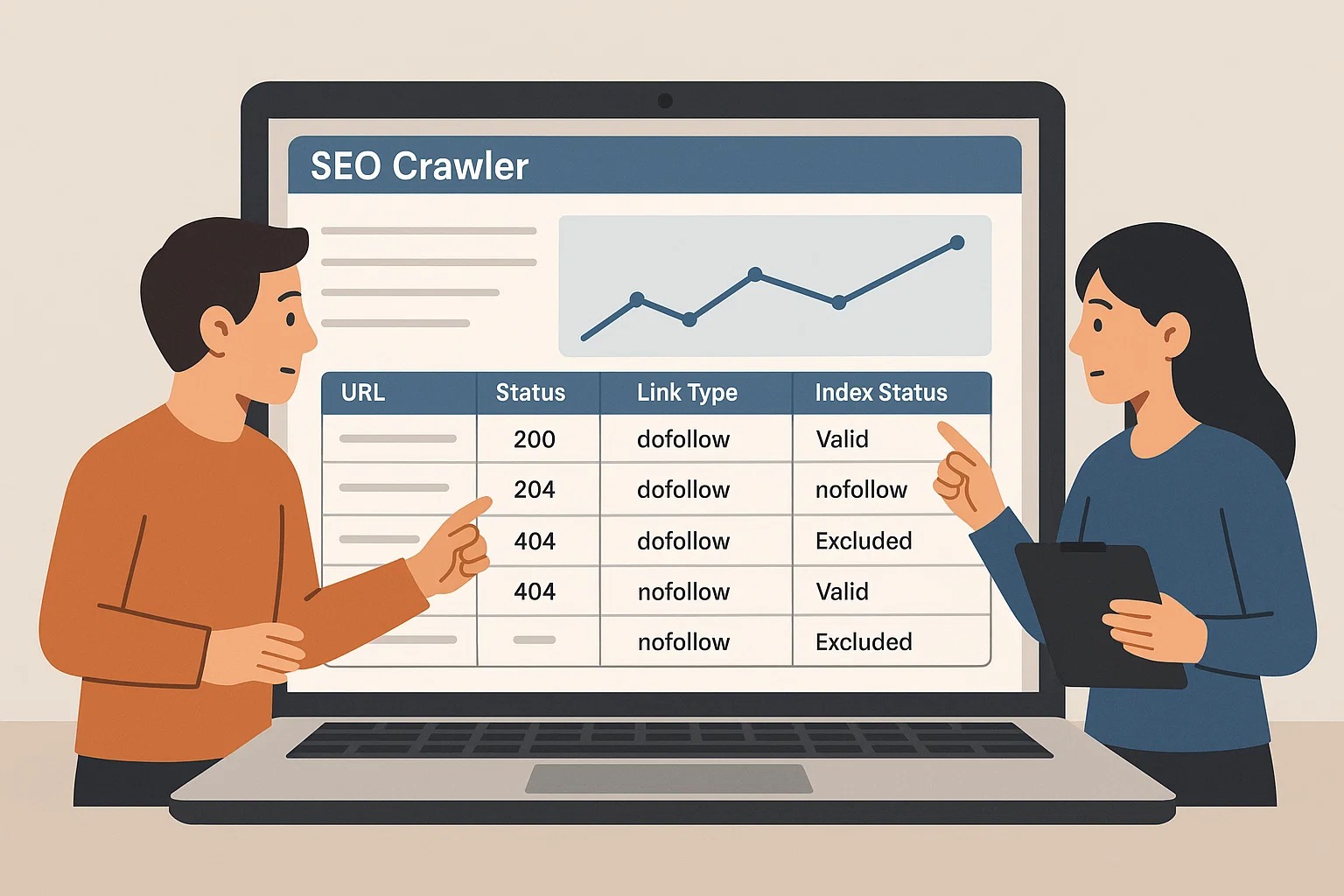
Step 2: Crawl and Verify Link Health
Use Screaming Frog with custom extraction to:
Check if the link is present
Identify nofollow/dofollow
Confirm indexability of the page
Step 3: Authority & Quality Scoring
Pull DR/DA/TF/CF using Ahrefs/Moz/Majestic API
Evaluate domain traffic and bounce rate via SimilarWeb
Filter out PBNs (Private Blog Networks) by analyzing:
Whois data
Hosting patterns
Template footprints
Outbound link ratio
Step 4: Anchor Text Analysis
Create a pivot table per project to show anchor diversity
Red-flag projects with >10% exact-match anchors
Recommend dilution with branded/generic anchors where needed
Step 5: Topical Relevance & Content Quality
Use NLP tools (Google NLP API, IBM Watson) to:
Analyze content category of linking pages
Map to client site taxonomy
Assign topical relevance score (1–5 scale)
Identify AI-generated vs human content (if possible)
Step 6: Traffic Attribution & Uplift
Match post-publish dates to Google Analytics referral spikes
Use UTM-tagged links to measure CTR
Compare pre- and post-link keyword rankings using SEMrush or Rankar.ai
Step 7: Agent & Publisher Performance
Create performance dashboards for each agent of links placed:
Avg. DR of links
Cost per link
Turnaround time
Rejection rate
Filter top publishers by:Retention (how many repeat posts they accepted)
Indexing speed
Best Practices & Red Flags
Best Practices:
Automate data pull with APIs (Ahrefs, Moz, Screaming Frog CLI)
Keep a central audit dashboard (Looker Studio, Airtable)
Maintain topical mapping matrix per client niche
Quarterly detox of toxic/spammy links using Disavow tool
Use AI-based writing tools (e.g., Rankar's RankWriter) for content optimization
Red Flags:
High reliance on one anchor type
Links from unrelated or low-traffic sites
Hidden or unindexed links
Sudden spikes in toxic score or penalty risk
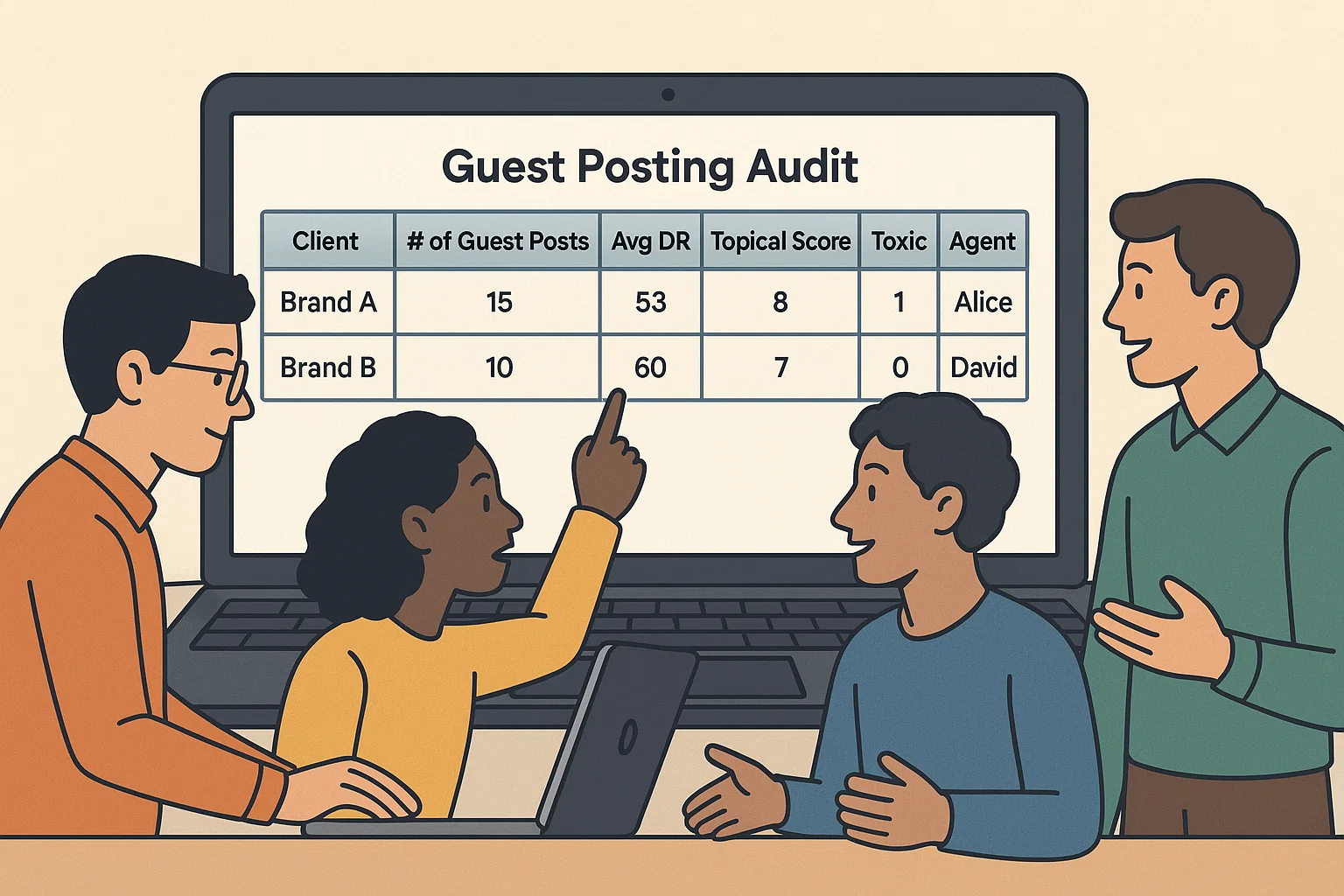
Sample Audit Dashboard Layout
Client | # of Guest Posts | Avg. DR | Topical Score | Exact Match Anchors | Toxic Links | Agent |
|---|---|---|---|---|---|---|
Brand A | 18 | 62 | 4.7 | 3/18 | 0 | Agent X |
Brand B | 12 | 45 | 3.9 | 5/12 | 1 | Agent Y |
Tools & Integrations to Streamline
Rankar.ai – Agent task management, AI content writer, DR filters, link indexing status
Screaming Frog SEO Spider – Custom crawl extraction scripts
Ahrefs/Moz API – Domain metrics
Looker Studio + Google Sheets – Reporting
Zapier – Connect publishing approvals to dashboards
Final Recommendations
Prioritize link quality over quantity
Continuously train agents with real examples of link placement audits
Build an automated performance monitoring system
Integrate AI SEO recommendations for every link placed
Auditing guest posting across 10+ projects requires an enterprise-grade approach that blends technical SEO, AI insights, and process automation. With the right framework, even complex outreach networks can be systemized for scale, quality, and measurable ROI.