
How to Package Guest Posting Services for Clients
Once you’ve mastered guest posting for yourself and can consistently create high-quality posts, the next step is to start offering services to clients....
Once you’ve mastered guest posting for yourself and can consistently create high-quality posts, the next step is to start offering services to clients. Packaging your guest posting services effectively is crucial for attracting clients, setting clear expectations, and maximizing revenue. This guide will help Level 3 students understand how to create professional, profitable packages that clients love.
Why Packaging Matters
Many beginners make the mistake of selling hourly rates or single services. While this works at first, it limits your earning potential. Well-defined packages make your services more appealing and easier to sell.
Benefits of Packaging:
Clear Expectations: Clients know exactly what they’re getting.
Simplified Sales: Easier to communicate prices and deliverables.
Higher Revenue: Packages allow you to bundle services and charge more.
Professionalism: Well-structured packages make you look experienced.
Pro Tip: Treat your packages like products. The better they’re structured, the easier they sell.
Step 1: Define Your Services
Before creating packages, list all services you can offer. Common guest posting services include:
Finding high-authority websites for guest posts
Writing high-quality guest posts (SEO-optimized)
Outreach to websites and pitching articles
Placing guest posts with backlinks
Reporting results and tracking performance
Pro Tip: Start simple. Offer what you can consistently deliver, then expand over time.
Step 2: Identify Client Needs
Different clients have different budgets and goals. Ask yourself:
Are they a small blogger or a large business?
Do they need one-time posts or monthly packages?
Are they focused on SEO or brand awareness?
Understanding client needs helps you customize packages and justify your pricing.
Step 3: Create Tiered Packages
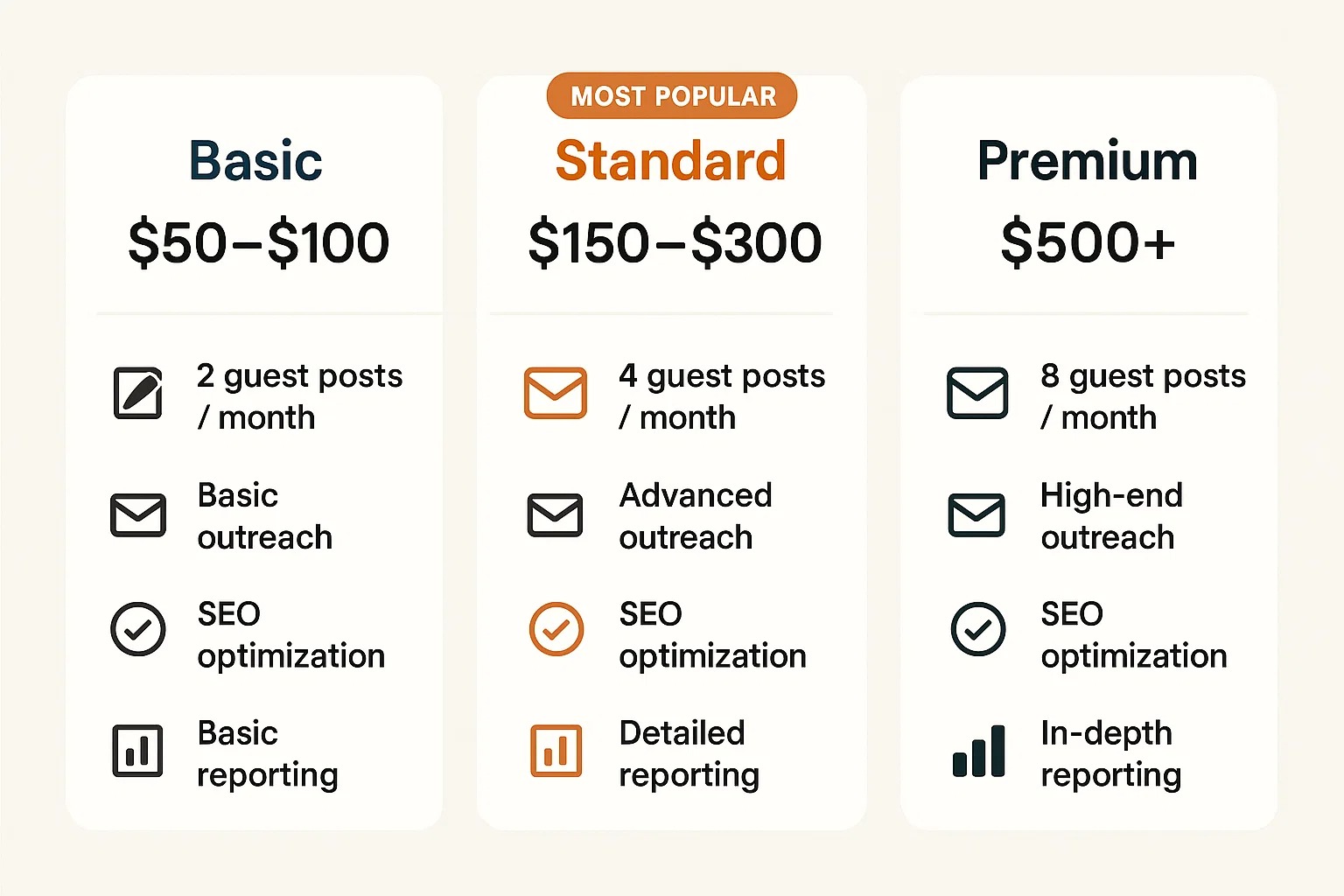
Tiered packages help cater to different budgets and goals. A simple approach is three tiers:
1. Basic Package
Suitable for beginners or small blogs
Includes: 1–2 guest posts per month, basic outreach, and simple reporting
Price: $50–$100 per month (adjust according to market)
2. Standard Package
For growing businesses or serious bloggers
Includes: 3–5 guest posts per month, advanced outreach, SEO optimization, basic analytics
Price: $150–$300 per month
3. Premium Package
For established businesses or agencies
Includes: 6–10 guest posts per month, niche-specific placements, full SEO optimization, detailed reporting, and analytics
Price: $500+ per month
Pro Tip: Name your packages creatively (e.g., Starter, Pro, Expert) to make them appealing.
Step 4: Add Value with Extras
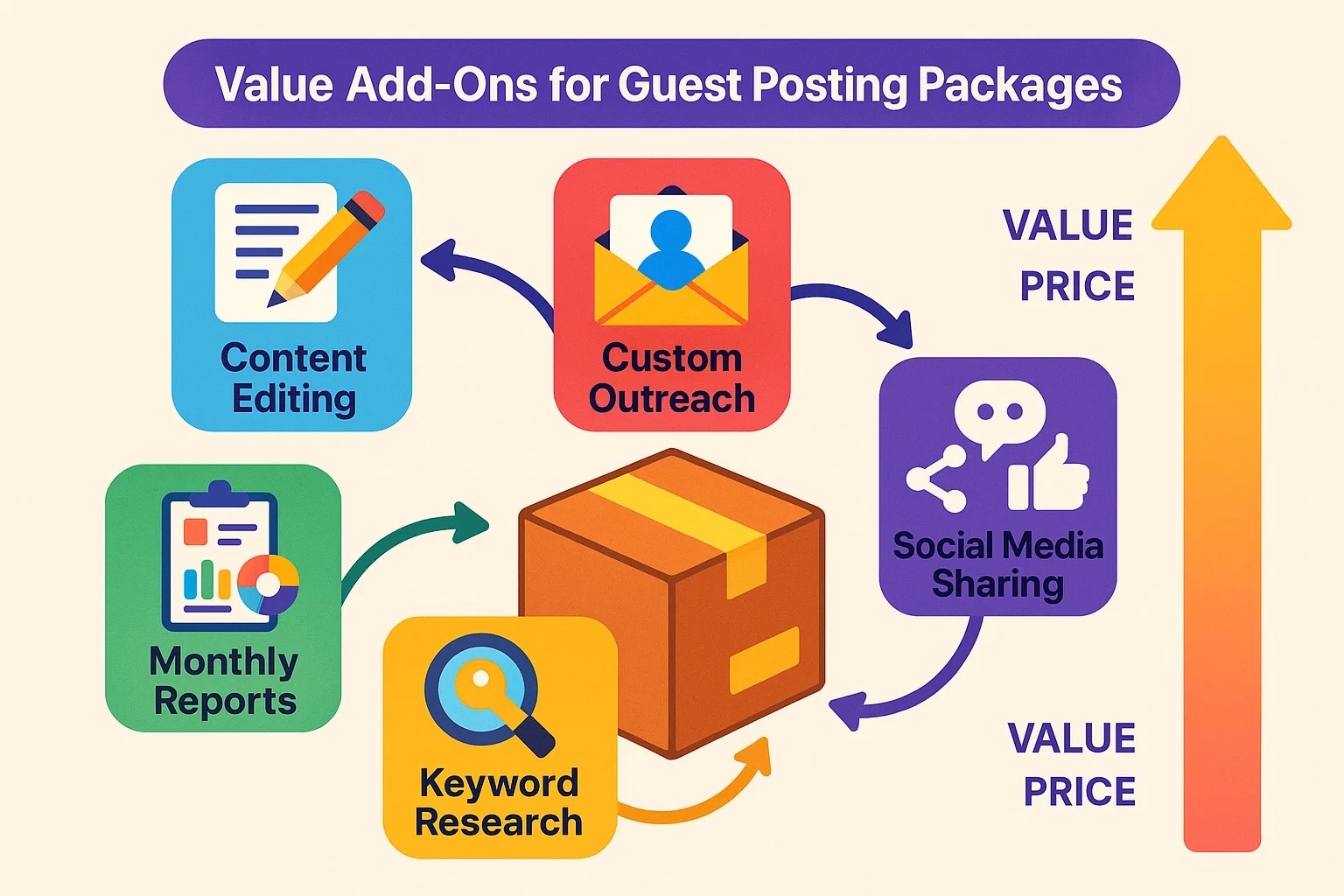
Extras make your packages more attractive and allow you to charge more:
Content Editing: Ensure posts are polished and professional
Custom Outreach: Target specific high-authority websites
Monthly Reports: Show clients the ROI of guest posts
Keyword Research: Include SEO keywords in the guest post
Social Media Sharing: Promote posts on social platforms
Pro Tip: Bundling extras can turn a standard package into a premium experience without much extra effort.
Step 5: Decide Your Pricing Strategy
Pricing depends on several factors:
Time Required: How many hours per post or outreach?
Value to Client: Some industries pay more for backlinks (finance, health, tech).
Your Skill Level: Experienced guest posters can charge more.
Market Rates: Check competitors to ensure your prices are reasonable.
Pricing Tips:
Start with competitive rates, then increase as you gain credibility.
Consider offering discounts for long-term contracts.
Avoid underpricing—it can reduce perceived value.
Step 6: Present Your Packages Professionally
Once packages are ready, present them clearly to potential clients:
Create a PDF or Landing Page: List services, deliverables, and pricing
Highlight Benefits: Focus on results, such as “Increase website traffic” or “Boost SEO rankings”
Include Testimonials or Case Studies: Proof of your expertise builds trust
Call-to-Action: Encourage clients to contact you for a consultation
Pro Tip: Make it simple. A well-organized package sheet builds trust and closes sales faster.
Step 7: Offer Custom Packages
Some clients may need specific services outside your standard packages. Offering customized solutions can help:
Combine services from different packages
Offer extra posts, targeted placements, or analytics support
Adjust pricing according to effort and value
Pro Tip: Custom packages allow flexibility but always set a minimum price to ensure profitability.
Step 8: Track Results for Clients
After delivering your guest posts, provide reports and metrics to clients:
Website placements and backlinks
Traffic growth and SEO impact
Keyword rankings
Social engagement (if included)
Tracking results demonstrates your value, helps retain clients, and justifies your pricing for future projects.
Step 9: Upsell and Retain Clients
Once clients see results, offer:
Monthly retainer packages for continuous guest posting
Premium placement opportunities on high-authority sites
SEO audit and content improvement service
Upselling is easier when clients trust your expertise and see tangible results.
Common Mistakes to Avoid
Offering vague services – Clients need clarity on deliverables
Overpromising – Deliver what you can consistently produce
Ignoring client goals – Customize packages for their niche and needs
Undervaluing your work – Charge for your expertise, not just time
Not tracking results – Clients value measurable ROI
Conclusion
Packaging guest posting services is a strategic step for turning your skills into a profitable business. Well-defined packages help:
Attract clients with clarity
Increase revenue with bundled services
Build professional credibility
Retain clients with measurable results
By following this guide, Level 3 students can confidently structure their guest posting services, price them strategically, and scale their freelance business effectively.