
How to Price Your Guest Posts for Maximum Profit
Once you’ve mastered creating high-quality guest posts and can consistently deliver results for clients, the next crucial step is learning how to price your...

Once you’ve mastered creating high-quality guest posts and can consistently deliver results for clients, the next crucial step is learning how to price your services effectively. Pricing too low can undervalue your work, while pricing too high without justification can drive clients away. This guide will help Level 3 students understand strategies to price guest posts, maximize profits, and scale their freelance business.
Why Proper Pricing Matters
Many beginners make the mistake of charging arbitrarily, often guessing a number based on what competitors are doing. Proper pricing:
Reflects Value: High-quality guest posts require research, outreach, writing, and placement efforts.
Builds Professionalism: Clients are more likely to trust your services if pricing is structured and justified.
Ensures Sustainability: Fair pricing ensures you can grow without burning out.
Maximizes Profit: You can earn more without necessarily working more hours.
Pro Tip: Think of guest posts as a product, not just a service. Every placement is a valuable asset to your client.
Step 1: Understand the Components of a Guest Post
Before setting a price, understand what your service includes. Common components:
Research & Topic Selection: Identifying high-value websites and relevant topics
Content Creation: Writing an SEO-optimized, engaging article
Outreach & Negotiation: Pitching the guest post to website owners
Placement & Approval: Getting the article published with live backlinks
Reporting & Tracking: Providing analytics to the client
Each component takes time and skill. Break down your costs before finalizing pricing.
Step 2: Analyze the Market
Look at what other guest posters charge:
Freelancers on platforms: Fiverr, Upwork, or Freelancer
Agencies: Offer higher rates but more comprehensive services
Specialized niches: Finance, health, and tech often pay more due to higher ROI
Pro Tip: Research competitors but don’t copy prices blindly. Consider your skills, reputation, and efficiency.
Step 3: Pricing Models
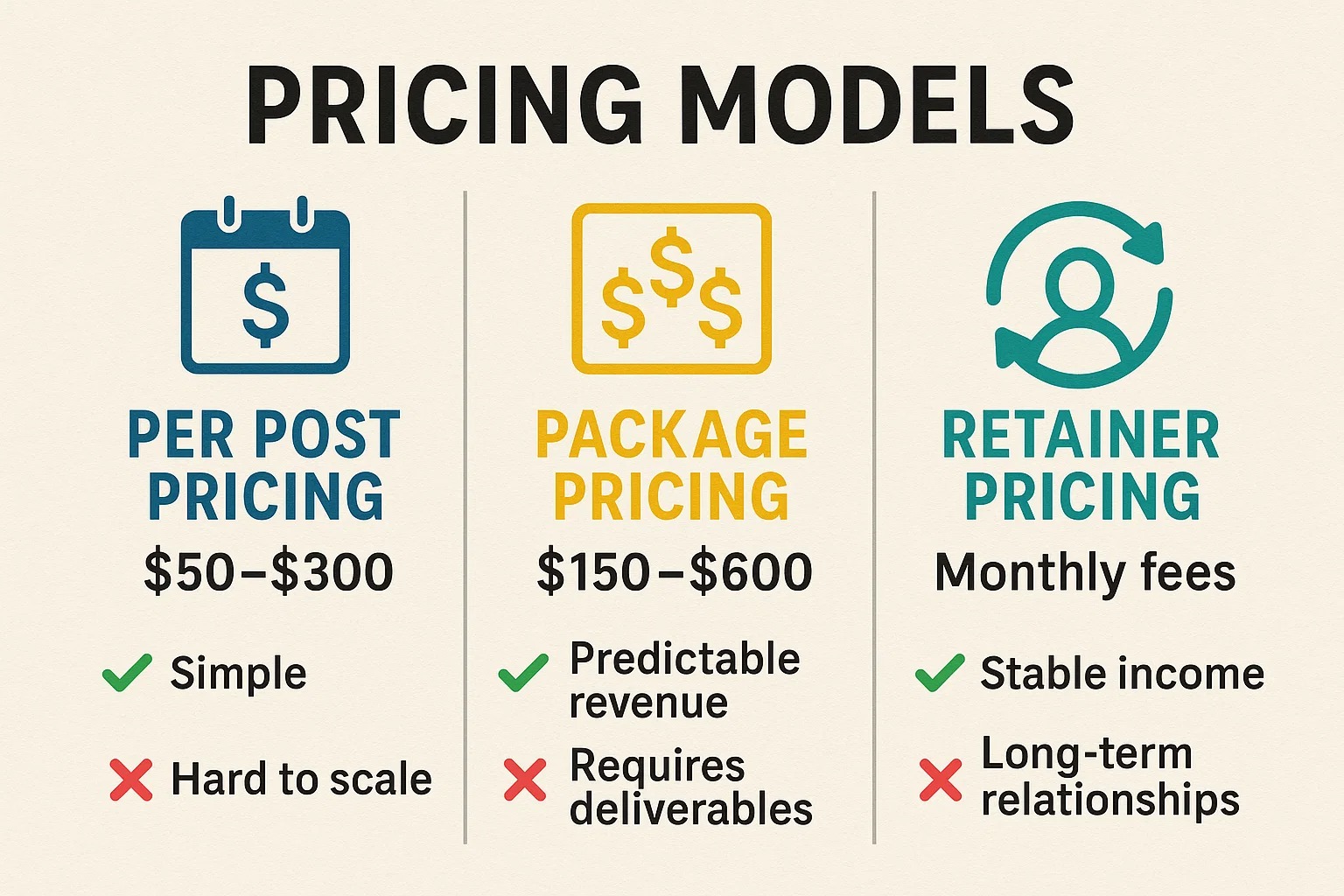
There are three main ways to price guest posts:
1. Per Post Pricing
Charge a fixed rate for each guest post. Example: $50–$300 depending on website authority.
Pros: Simple to understand and communicate
Cons: Harder to scale if clients want multiple posts per month
2. Package Pricing
Offer tiered packages for multiple posts per month (Starter, Pro, Premium).
Pros: Easier to sell, predictable revenue, adds value to clients
Cons: Requires clear deliverables and deadlines
3. Retainer / Monthly Pricing
Charge clients monthly fees for ongoing guest posting services.
Pros: Stable income, long-term client relationships
Cons: Requires consistent output and reporting
Pro Tip: Beginners often start with per post pricing and gradually move to packages or retainers as their credibility grows.
Step 4: Determine Factors Affecting Price
Several factors should influence your pricing:
Domain Authority (DA) of Target Websites: Higher DA = Higher pricing
Niche Difficulty: Competitive niches (finance, health, tech) pay more
Word Count & Complexity: Longer, research-heavy articles should cost more
Number of Backlinks: More backlinks increase the value
Turnaround Time: Urgent requests may justify premium pricing
Value to Client: Consider how much your post will impact traffic, leads, or sales
Pro Tip: Use a pricing calculator or spreadsheet to evaluate these factors before quoting.
Step 5: Example Pricing Strategy
Here’s a sample approach for a beginner to advanced freelancer:
Package Type | Number of Posts | Target Sites | Price (USD) | Notes |
Starter | 1 post | DA 20–30 | $50–$70 | Basic post with single backlink |
Standard | 3 posts | DA 30–50 | $150–$250 | Includes SEO optimization & reporting |
Premium | 5 posts | DA 50+ | $400–$600 | Includes research, outreach, analytics, and social sharing |
Pro Tip: Always justify your price with tangible benefits—clients pay for results, not just words.
Step 6: Handling Negotiations
Clients may try to bargain or request lower prices. Strategies:
Set Minimum Rates: Know the lowest you’re willing to accept
Offer Packages Instead of Single Posts: Increases perceived value
Explain Value Clearly: Show the ROI of your guest posts
Be Confident: Don’t undervalue your skills—high-quality posts are worth more
Pro Tip: If a client insists on low prices, politely decline and focus on better opportunities.
Step 7: Upselling for Higher Profit
Once a client sees results, you can upsell services:
More posts per month
Targeting higher authority websites
Advanced SEO optimization
Social media promotion
Content strategy consultation
Pro Tip: Upselling works best when you show measurable results, like increased traffic or backlinks.
Step 8: Automate & Streamline Your Pricing
To save time and scale efficiently:
Use templates for quotes and proposals
Maintain a pricing sheet based on DA, niche, and content complexity
Use tools like SEMRush to evaluate website authority and backlinks
Pro Tip: Automation reduces errors and ensures consistency in client communication.
Step 9: Common Pricing Mistakes to Avoid
Undervaluing Your Work: Don’t charge too little just to get clients
Ignoring Complexity: Longer or research-heavy posts should cost more
Failing to Include Extras: Always consider outreach, reporting, and analytics
No Tiered Pricing: A single price may not fit all client types
Not Reviewing Market Trends: Adjust pricing as the industry evolves
Step 10: Scaling Your Income
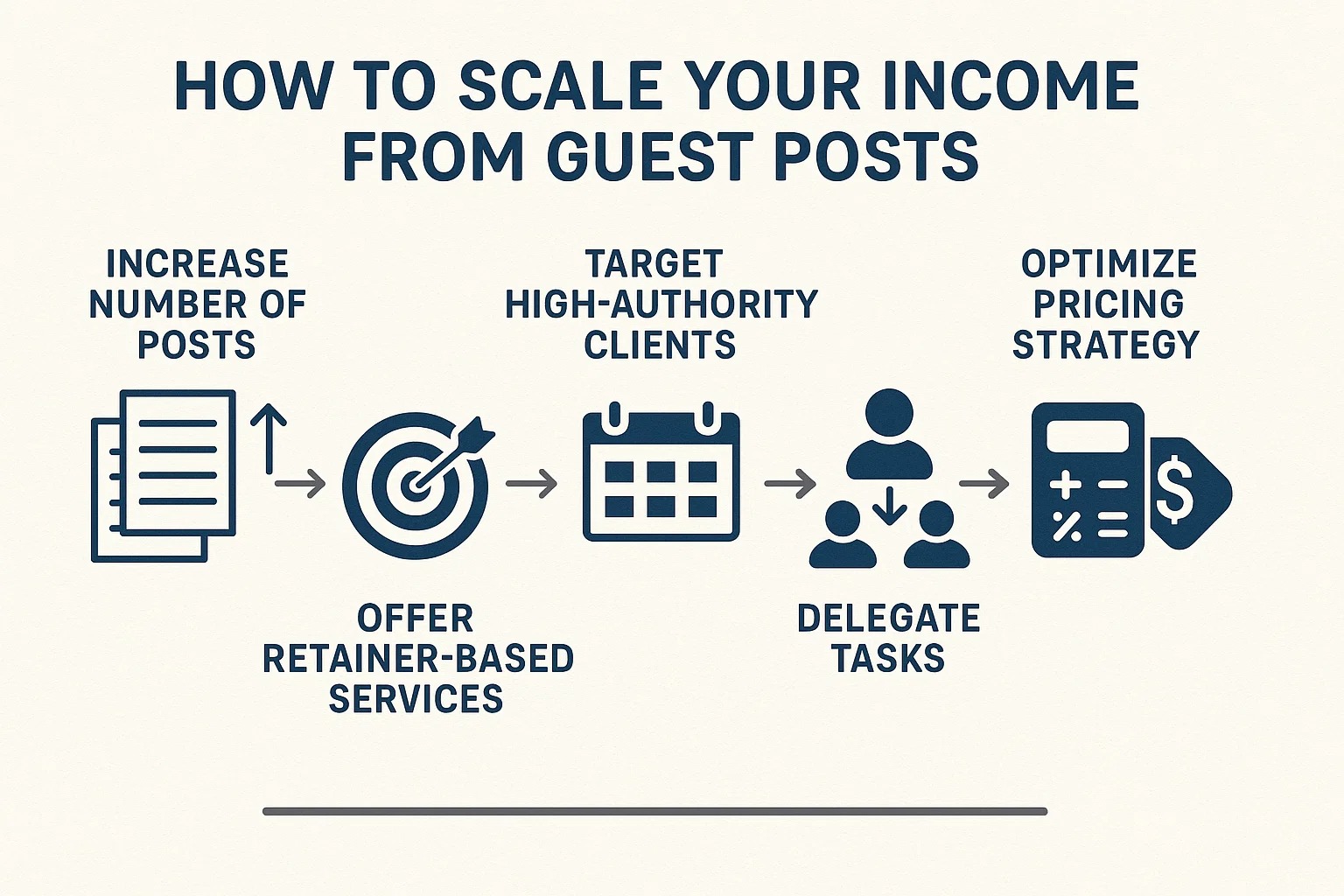
After mastering pricing, you can scale by:
Increasing the number of posts per month
Targeting high-authority clients willing to pay premium rates
Offering retainer-based services for stable income
Delegating content writing or outreach to assistants
Goal: Many guest posting pros can earn $1,000+ per month once packages, pricing, and client management are streamlined.
Conclusion
Pricing guest posts isn’t just about numbers—it’s about understanding the value you provide, your expertise, and the results clients expect. A well-structured pricing strategy helps:
Build client trust and credibility
Maximize profits without overworking
Scale your guest posting business efficiently
By following this guide, Level 3 students can confidently price their guest posts for maximum profit and establish a sustainable, professional freelance career.