
How to Rank Your Blog in AI Search
How to Rank Your Blog in AI Search: A Beginner’s GuideAI-powered search engines are changing how content is discovered online. For beginners, ranking in AI...

AI-powered search engines are changing how content is discovered online. For beginners, ranking in AI search isn’t just about traditional SEO—it’s about E-E-A-T, structured content, and AI-friendly practices. This guide will help you understand how to make your blog AI-search-ready and attract more readers.
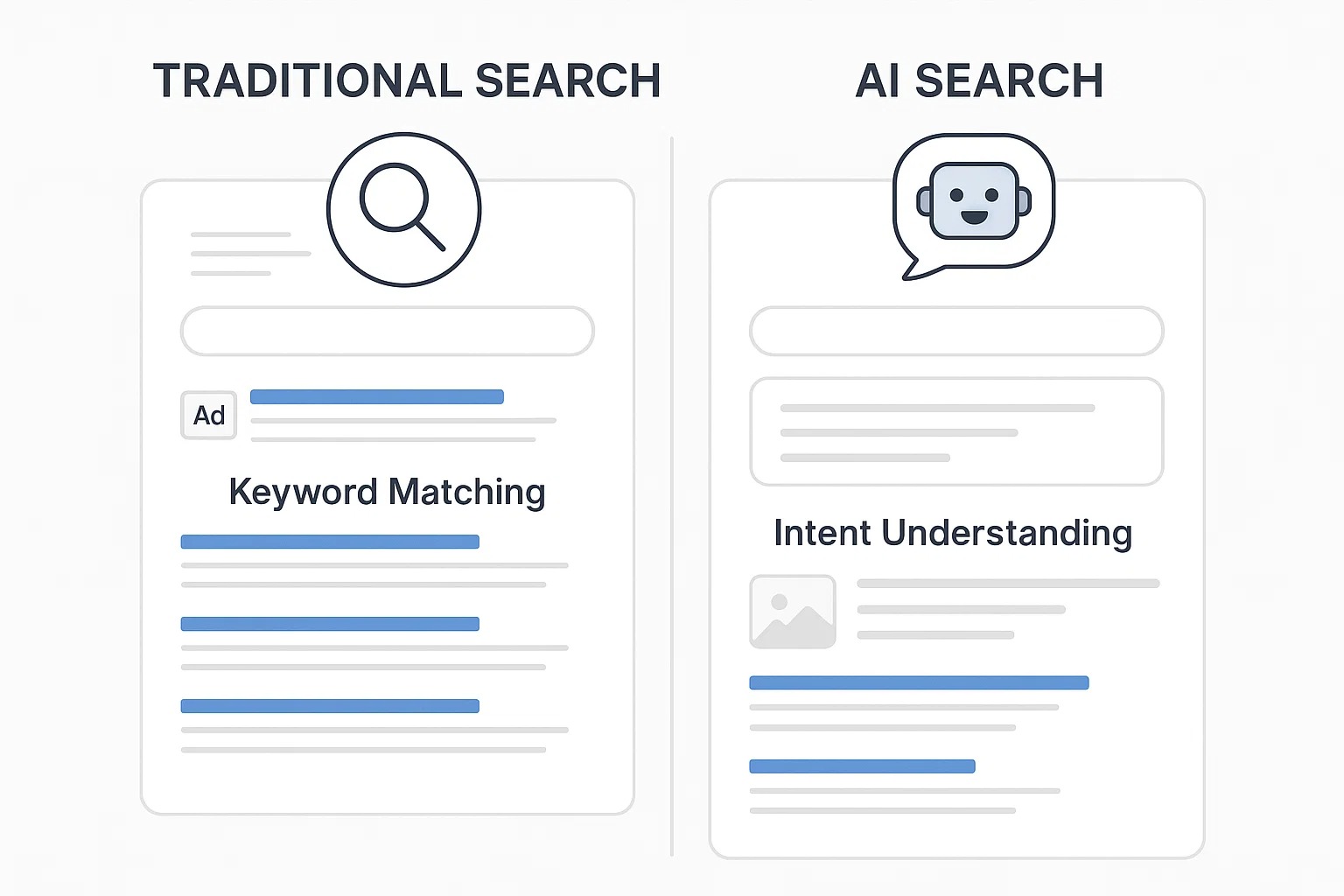
What is AI Search?
AI search uses artificial intelligence to understand the intent behind queries and deliver more accurate, relevant results. Unlike traditional search engines, AI searches prioritize content that is:
Informative and credible
Well-structured and easy to understand
Engaging and aligned with user intent
1. Showcase Expertise, Experience, Authority, and Trust (E-E-A-T)
E-E-A-T is a key factor in AI search ranking:
Expertise: Show knowledge in your niche through in-depth articles.
Experience: Include real examples, case studies, or personal stories.
Authority: Build credibility by linking to reputable sources and having your blog recognized in your niche.
Trust: Ensure accuracy, maintain transparency, and use clear author information.
For beginners, even small blogs can demonstrate E-E-A-T by creating honest, well-researched, and informative content.
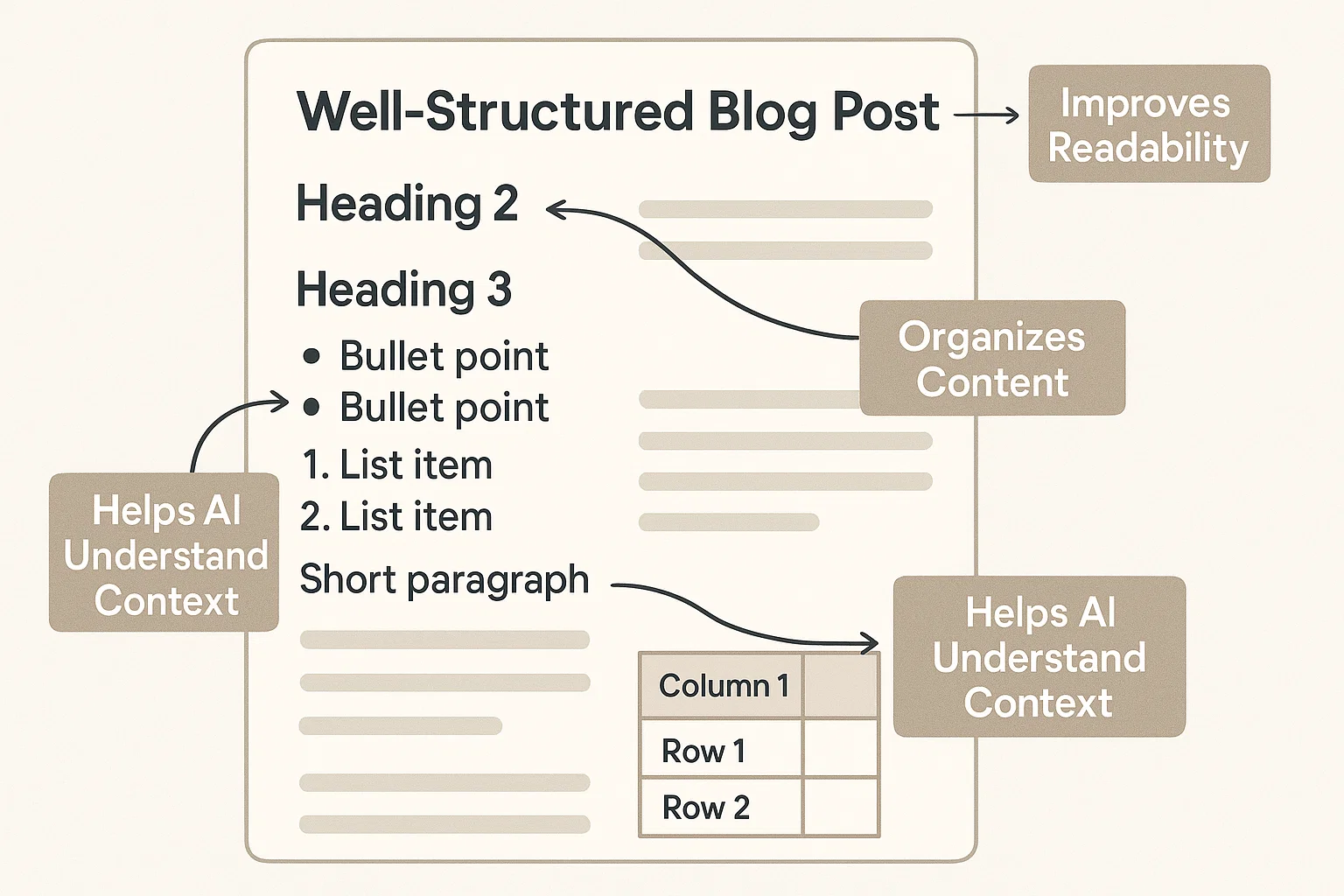
Use Structured and Clear Content
AI loves content that is easy to read and understand. Use:
Headings and subheadings: H1, H2, H3 to organize your article
Bullet points or numbered lists: Make information scannable
Short paragraphs: Avoid long walls of text
Tables or visuals: Help summarize complex information
Structured content helps AI understand your article’s topic and improves user experience.
Add FAQs and Q&A Sections
FAQs are highly effective for AI search:
Answer common questions related to your topic
Use a question-answer format for clarity
Include long-tail keywords naturally in questions
Helps your content get featured in AI-powered snippets
Example:
Q: How can beginners optimize their blog for AI search?
A: Start by focusing on E-E-A-T, structured content, and AI-friendly keywords.
Keep Your Content Fresh and Updated
AI search prefers recent and relevant content. For your blog:
Update old posts with new information or statistics
Republish with updated examples or case studies
Add new sections to cover trending topics in your niche
Fresh content signals authority and relevance to AI search algorithms.
Use AI-Friendly Long-Tail Keywords
Keywords are still important, but AI search values long-tail, conversational phrases:
Use keywords similar to how people ask questions naturally
Tools like RankWriter, SEMrush, or Google Keyword Planner can help identify AI-friendly terms
Focus on niche-specific, low-competition phrases to rank faster
Example: Instead of “guest posting,” use “how to write a guest post for beginners in 2025.”
Additional Tips for AI Search Optimization
Internal linking: Connect related blog posts to boost authority
External linking: Link to credible sources to build trust
Mobile-friendly design: AI search considers usability on all devices
Fast loading speed: Pages should load quickly for better ranking
Readable content: Avoid jargon, keep language simple for beginners
FAQs
Q: Can a new blog rank in AI search?
A: Yes, by focusing on E-E-A-T, structured content, long-tail keywords, and consistent updates.
Q: How often should I update my blog?
A: At least once every 3–6 months to keep content fresh and relevant.
Q: Are keywords still important for AI search?
A: Yes, but long-tail, conversational keywords perform better than short generic ones.
Q: Do visuals help with AI ranking?
A: Absolutely! Charts, tables, and images make content easier to understand and improve engagement.
Conclusion
Ranking your blog in AI search is achievable even for beginners. Focus on:
Showcasing E-E-A-T
Creating structured and clear content
Adding FAQs and Q&A sections
Publishing fresh and updated content
Using AI-friendly long-tail keywords
By following these steps, your blog can become AI-search-ready, attract more visitors, and build authority in your niche.