
How to Write Guest Posts That Reflect Research-Level Credibility
Introduction: From Academic Papers to Digital InfluencePhDs spend years mastering the art of writing — precise language, logical structure, verified data, and...

Introduction: From Academic Papers to Digital Influence
PhDs spend years mastering the art of writing — precise language, logical structure, verified data, and well-reasoned arguments.
In academia, that writing earns recognition in journals and conferences.
But online, the same writing skills can build authority, traffic, and income — if applied through the right format: guest posting.
Guest posting is the digital world’s version of academic publishing.
It allows you to share your expertise on established websites, reach global audiences, and get “cited” through backlinks instead of references.
Platforms like Rankar.ai make this process seamless — connecting PhDs to global websites, helping them publish professionally written guest posts, and rewarding them for their credibility.
This article will show you how to write guest posts that reflect your research-level depth — without losing readability or accessibility.
What Makes a Guest Post “Credible”?
In academic writing, credibility comes from:
Verified sources
Clear logic
Evidence-based conclusions
Objectivity
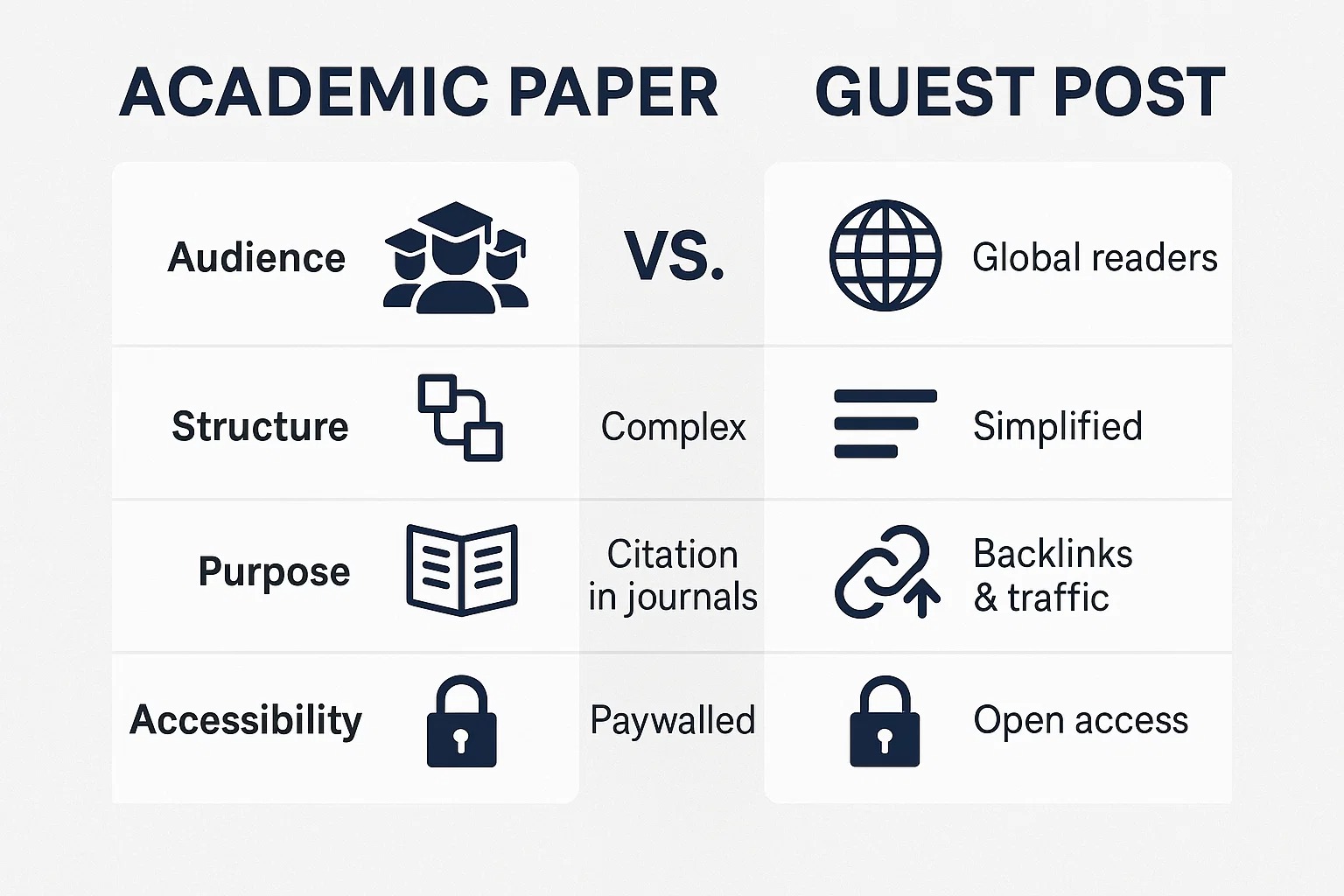
In digital writing, the same elements apply — but in a simplified and story-driven format.
A credible guest post should:
✅ Present a clear and focused idea.
✅ Include data or insights (not opinions only).
✅ Link to reliable sources (studies, journals, or data).
✅ Provide value that helps readers take action.
Essentially, a credible guest post combines academic accuracy with public clarity.
Your research remains the foundation — but the delivery becomes conversational and accessible.
Step 1: Start With a Strong Topic — Your “Digital Thesis”
Every PhD knows the importance of defining a clear thesis statement.
In guest posting, your topic plays the same role — it defines your scope and direction.
Choose a topic that is:
Narrow and specific (micro niche).
Relevant to your expertise.
Backed by real data or insights.
Aligned with what people are searching for online (you can check this through Rankar.ai’s keyword tools).
Example:
Academic version → “An Analytical Study on Renewable Energy Awareness Among Rural Populations.”
Guest post version → “Why Rural Communities Are the Key to Renewable Energy Adoption in Pakistan.”
Both explore the same theme — but the second one communicates faster, connects better, and attracts readers from multiple sectors.
Step 2: Structure It Like a Research Summary
A strong guest post follows a structure that feels familiar to any PhD:
Academic Paper | Guest Post Equivalent |
Abstract | Introduction (hook the reader) |
Literature Review | Background or data insight |
Methodology | Explanation or process |
Results | Main argument or finding |
Discussion | Implications or applications |
Conclusion | Takeaway or call to action |
The difference?
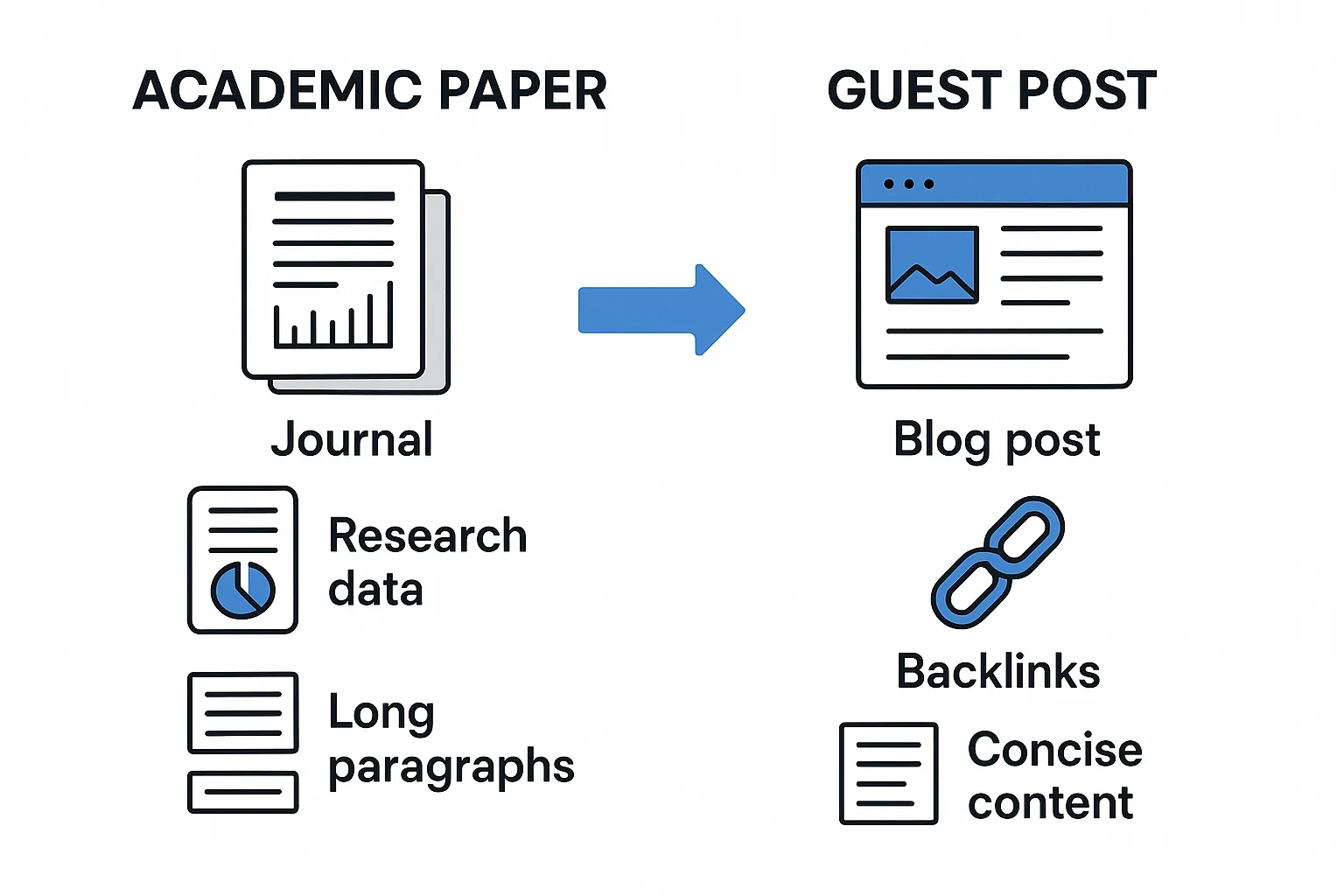
You don’t need long paragraphs or complex citations — just clear explanations supported by examples, links, or stats.
Rankar.ai’s AI-powered writing tools can even help outline your structure automatically, so your posts retain academic flow while fitting digital style.
Step 3: Write for Readability — Not for Reviewers
Academic writing often targets professors and experts.
Guest posting targets readers — professionals, entrepreneurs, policymakers, and learners.
That means your tone should shift from formal to accessible.
Here’s how:
Use short paragraphs (2–4 lines).
Replace jargon with simpler terms.
Add subheadings, bullet points, and examples.
Write like you’re explaining a complex idea to an intelligent reader outside your field.
✅ Instead of: “Socioeconomic determinants have a correlative influence on the adaptive behaviors of educational stakeholders.”
👉 Try: “A school’s income level directly affects how teachers and parents adapt to new learning methods.”
You’re still saying something intelligent — but in a way that connects instantly.
Step 4: Add Evidence — Your Research Edge
What separates a PhD’s guest post from an average blog?
Evidence.
PhDs can quote studies, reference research papers, or include short data points that make their articles more authoritative than typical online content.
Example:
“According to a 2023 study in the Journal of Sustainable Development, over 65% of rural households showed increased adoption of solar panels after targeted awareness campaigns.”
This transforms your post from opinion-based writing into research-backed insight — the type of content brands and publishers on Rankar.ai love to feature.
Step 5: Optimize for SEO Without Losing Integrity
PhDs often think SEO means “keyword stuffing.” It’s not.
SEO simply helps Google understand what your article is about — so the right readers can find it.
You can do this by:
Including your main keyword in the title, first paragraph, and subheadings.
Adding internal links (to your own posts) and external links (to credible sources).
Writing a meta description summarizing your article in 155 characters.
Example:
Keyword: Sustainable Energy in Rural Areas
SEO title: “Sustainable Energy in Rural Areas — Research Insights That Could Change Policy”
Meta Description: “Explore how research-backed strategies can make renewable energy more accessible to rural communities.”
That’s all SEO is — organizing your content clearly for both humans and algorithms.
And Rankar.ai’s built-in content tools guide you step-by-step through it.
Step 6: End With a Purpose — The Call to Action
In research papers, you end with implications or recommendations.
In guest posts, you end with a call to action (CTA) — a simple invitation for the reader to do something next.
Example CTAs for PhDs:
“Learn more about research-based content publishing at Rankar.ai.”
“Join HelpHour.org to start your digital writing journey.”
“Collaborate with industry experts on Shaheeno.com.”
A CTA gives your post purpose and direction — helping readers take the next step in your ecosystem.
HelpHour.org — Training PhDs to Master the Art of Guest Writing
If you’ve never written for digital platforms before, HelpHour.org is your starting point.
It offers structured training on how to:
Adapt academic research into public writing.
Use AI and SEO tools effectively.
Build a writing portfolio for guest posting opportunities.
Think of it as your transition lab — where you move from academic publishing to professional digital authorship.
Shaheeno.com — Collaborate, Publish, and Grow
Once you’ve published a few guest posts on Rankar.ai, the next step is collaboration.
Through Shaheeno.com, PhDs can connect with:
Editors and agencies who value credible content.
Other researchers working in similar digital fields.
Startups looking for data-driven consultants.
The goal is simple: turn your credibility into collaboration — and collaboration into income.
Example: Turning a Research Paper Into a Viral Guest Post
Let’s say your thesis was on AI in healthcare.
Your original research title:
“Predictive Analytics and Artificial Intelligence in Improving Diagnostic Accuracy.”
A guest post version could be:
“How AI Is Quietly Revolutionizing Medical Diagnostics — Insights from Academic Research.”
By simplifying your tone and presenting your findings in a relatable way, your article could be shared by medical blogs, LinkedIn professionals, and AI publications — instantly giving your research the global reach it deserves.
That’s the power of publishing through Rankar.ai.
Final Thought: Write to Be Read, Not Just Reviewed
As a PhD, your writing has already proven its intellectual strength.
Now it’s time to make it visible, shareable, and impactful.
By publishing guest posts through Rankar.ai, you can:
✅ Share research-backed insights with global readers.
✅ Build backlinks and online authority.
✅ Earn from your writing.
✅ Collaborate through Shaheeno.com.
✅ Learn continuously via HelpHour.org.
You don’t need to change how you think — just how you communicate.
Your research deserves to be read, not just reviewed.
And Rankar.ai is where that journey begins.
👉 Publish your first guest post today at Rankar.ai — and turn your academic voice into a digital legacy