
Managing Multiple Projects & Clients Efficiently
If you're aiming to scale your guest posting business and manage multiple clients effectively, you need to adopt an organized approach, streamlined systems,...
If you're aiming to scale your guest posting business and manage multiple clients effectively, you need to adopt an organized approach, streamlined systems, and use the right tools to stay on top of things. As you grow from a solo guest post contributor to managing a portfolio of clients, efficiency becomes your best friend.
In this guide, we’ll cover how to manage multiple guest posting projects, optimize workflows, handle clients, and ensure timely results.
Why Managing Multiple Guest Posting Projects is Challenging
Managing several guest posting campaigns at once requires balancing various tasks—finding guest post opportunities, pitching editors, creating content, tracking outreach performance, handling communication, and reporting results. Without proper systems in place, it's easy to feel overwhelmed, and even small mistakes can cause delays or errors in your campaigns.
Here's why managing multiple projects efficiently is essential:
Complexity increases with the number of clients, each with its own set of requirements, KPIs, and goals.
Time-sensitive deadlines need to be met, such as posting dates and follow-ups.
The number of communication channels with publishers and clients grows.
Consistent reporting is necessary to show progress and results to clients.
Without proper systems and processes, you risk spreading yourself too thin, leading to a decline in quality, delays, and even lost business.
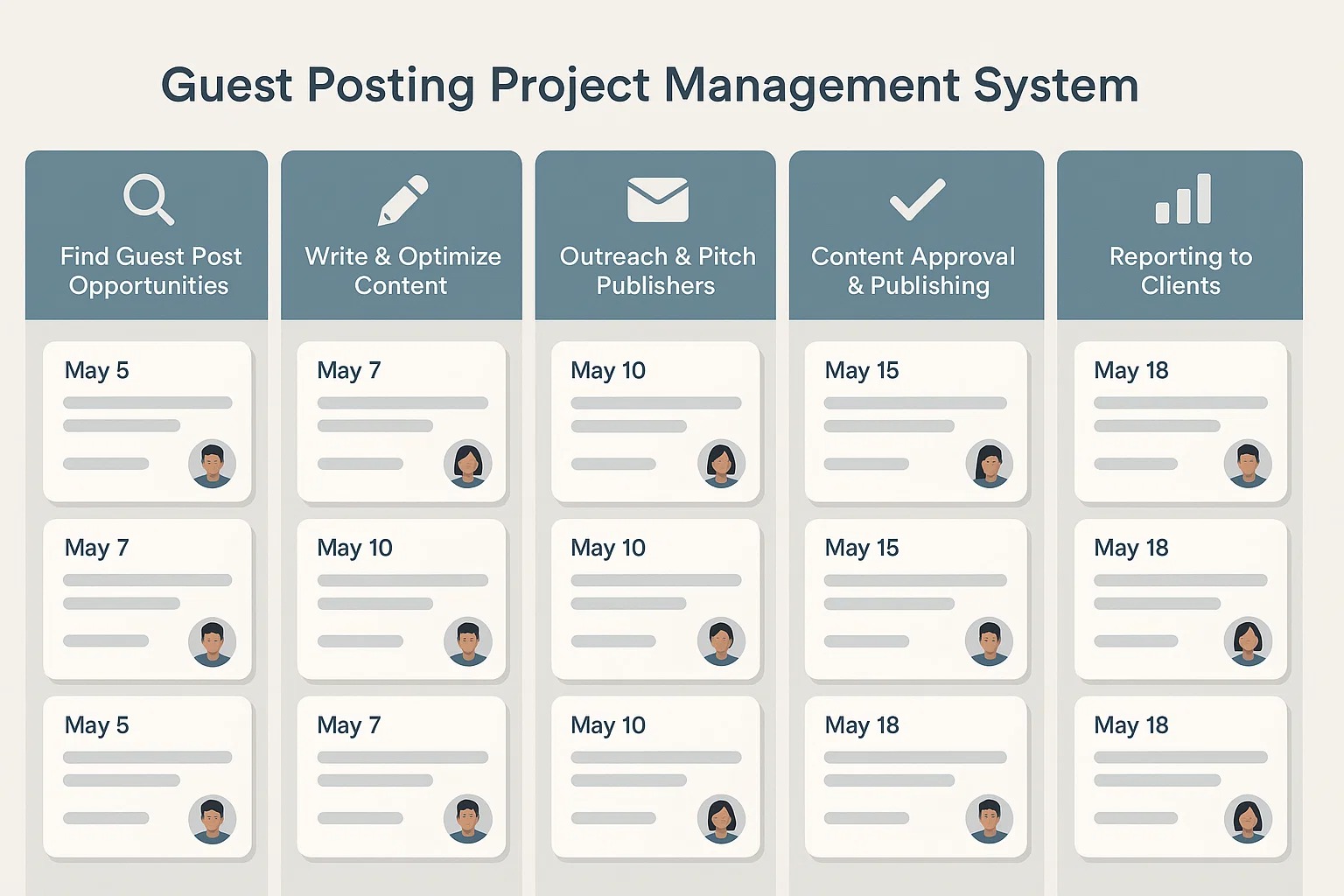
Step 1: Adopt a Clear Project Management System (PMS)
The first step to efficiently manage multiple clients and guest posting projects is to use a Project Management System (PMS). This will allow you to:
Track all your tasks, deadlines, and priorities in one place.
Organize workflows, both internal (within your team) and external (client communication).
Keep track of each guest post campaign, including progress, results, and any issues that may arise.
Here are some of the most effective project management tools for managing guest posting campaigns:
1. Asana or Trello
Asana and Trello are two of the most popular project management tools for managing tasks and tracking the progress of each guest posting campaign.
Features:
Kanban-style boards (Trello) or task lists (Asana) to organize tasks.
Deadline management and task assignment.
Tracking of guest post opportunities, content creation, publishing dates, etc.
How to Use for Guest Posting:
Create separate boards or projects for each client. Within each project, create task lists for:Finding guest post opportunities
Writing and optimizing content
Sending emails to publishers
Following up and tracking post approval
Reporting progress to clients
2. ClickUp
ClickUp is an all-in-one project management tool that combines task management, time tracking, and team collaboration in one platform.
Features:
Task management with different views (list, board, calendar, etc.)
Time tracking and integrations with time management tools.
Automation to reduce manual work.
Performance tracking with customizable reports.
How to Use for Guest Posting:
Organize your client accounts as different projects, with different stages for each campaign. You can set up workflows that include automations for sending follow-ups, task assignments, and updating client progress.
Step 2: Implement a Clear Workflow for Communication
Communication is critical when managing multiple clients. You’ll need to manage:
Client communication regarding project progress and results.
Publisher communication to pitch guest posts, follow up, and ensure the content gets published.
Tools to Use:
Slack: For internal communication with your team, ensuring updates and tasks are clear.
Email Templates: To speed up responses to clients and publishers.
CRM (Customer Relationship Management): Use a CRM tool like Pipedrive to track client communication and follow-ups.
Step 3: Track and Prioritize Deadlines and Deliverables
Guest posting campaigns come with strict timelines. Whether it’s content creation, submission dates, or client review deadlines, timing is crucial. Missing deadlines can harm your credibility, so it's essential to prioritize and stay on track.
How to Track Deadlines:
Use Google Calendar to set reminders for deadlines.
In Asana or Trello, set deadlines for each task and assign them to the team members responsible.
Use time tracking tools like Harvest or Toggl to measure how much time is spent on each task.
Step 4: Streamline Content Creation and Approvals
As you manage multiple guest post campaigns, content creation and approvals can become a bottleneck. Establishing a process to ensure smooth content production and approval cycles will save you significant time.
Create Templates for Content:
Prepare content templates and guidelines for each type of guest post (e.g., niche-specific formatting, length, keywords) to minimize time spent on revisions.Automate Approval Process:
Use tools like Google Docs for client content review, allowing comments and feedback to be easily tracked.
Step 5: Track Outreach and Guest Post Performance
Tracking outreach and performance across multiple campaigns is critical to managing your guest posting business efficiently.
Track Outreach:
Outreach Tools: Use tools like Pitchbox, Mailshake, or GMass to automate outreach and follow-ups.
Follow-Up Reminders: Set reminders for follow-up emails in your CRM or project management tool to ensure no publisher is left behind.
Track Performance Metrics:
Monitor key performance indicators (KPIs) for each campaign, such as:Response rates (how many publishers respond to your outreach)
Approval rates (how many of your guest post pitches are accepted)
Link placements (how many guest posts get published)
Tools like Google Analytics, Ahrefs, or SEMrush can help you track performance.
Step 6: Delegate Tasks to a Team (As You Grow)
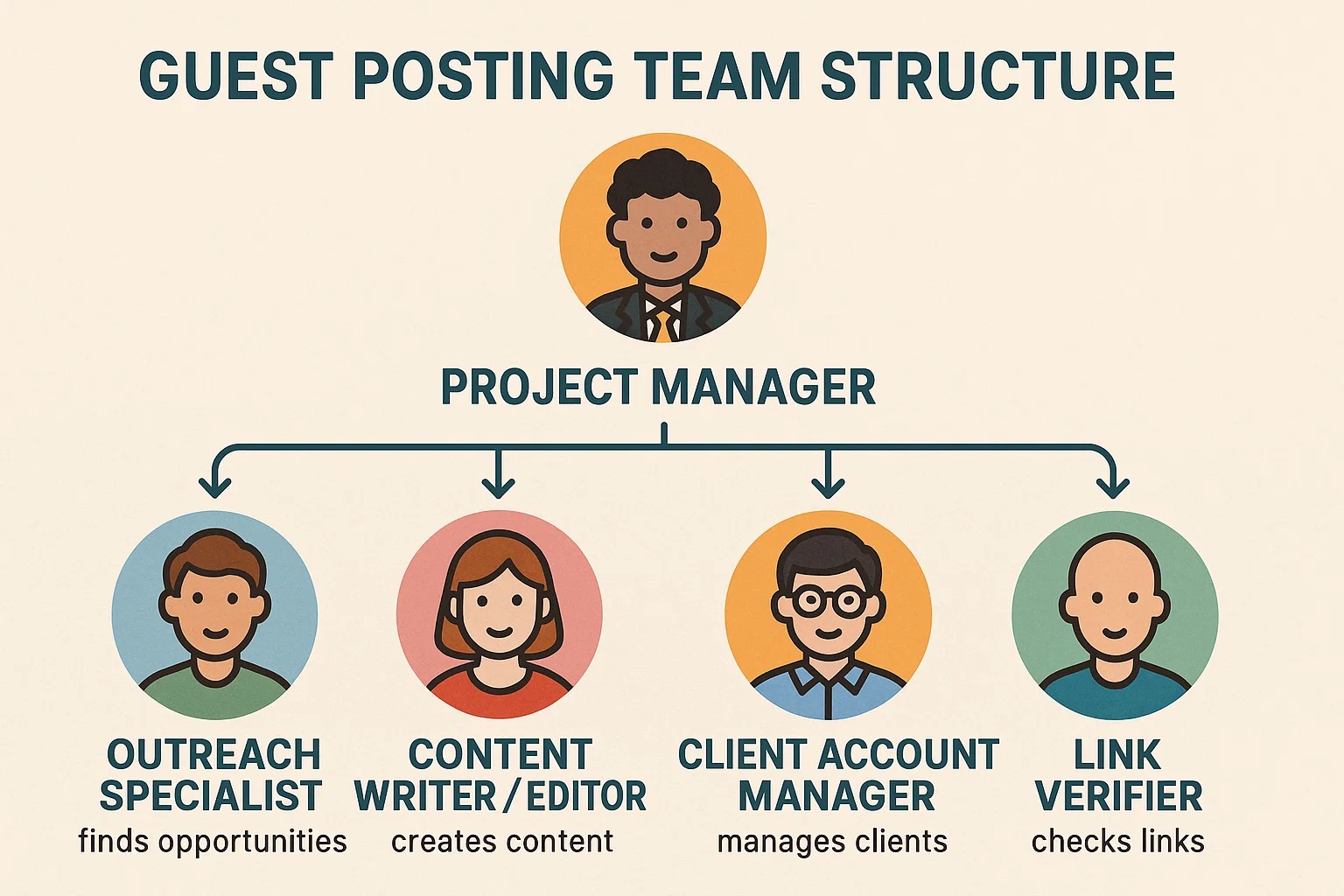
As your guest posting business grows, delegating tasks to your team becomes necessary. Building a team structure will allow you to manage more clients and projects simultaneously without compromising quality.
Team Structure for Managing Guest Posting:
Project Manager: Oversees all client projects, ensuring everything is on track.
Outreach Specialist: Handles finding guest post opportunities and pitching websites.
Content Writer/Editor: Creates and optimizes content for guest posts.
Client Account Manager: Ensures clients are updated on progress and handles client communication.
Link Verifier: Ensures that all links are placed and indexed correctly.
Step 7: Reporting to Clients Efficiently
Client reporting can be a time-consuming task if you’re not using the right tools. A consistent and efficient reporting process ensures clients are informed of the progress and results of their campaigns.
Automate Reports:
Use tools like Google Data Studio, AgencyAnalytics, or Rankar.ai to automate reports. You can create customized reports that show each client’s performance, including:Published guest posts
Domain Authority (DA) of the websites
Traffic improvements
Link-building progress
Keyword ranking improvements
Keep It Transparent:
Provide detailed reports with clear metrics to show the value you're delivering. Always back up your data with real-time analytics.
Step 8: Scale Your Outreach & Business
Once your system is running smoothly and you have clients, it’s time to scale. Scaling efficiently involves:
Outreach Automation: Use advanced outreach tools like Pitchbox and Mailshake to automate your outreach and handle more clients.
Client Acquisition: Build an ongoing pipeline of clients by networking, using LinkedIn, and marketing your guest posting services.
Expanding Your Team: Hire more agents and specialists as your business grows to manage the increased workload.
Conclusion
Managing multiple guest posting projects and clients requires a high level of organization, efficient workflows, and the right tools. Whether you're working solo or building a team, a structured approach will help you stay on top of deadlines, maintain quality, and scale your business.
By implementing the strategies and tools outlined in this guide, you’ll be able to manage multiple clients and projects like a pro. This approach will set you on the path to success, allowing you to deliver high-quality results while maintaining a scalable guest posting business.