
Understanding Keywords - How to Research and Use the Best Keywords for Your Blog with the Right Tools
When you’re just starting a blog, one of the most important things you’ll need to learn is how to find the right keywords. But what exactly are keywords, why...

When you’re just starting a blog, one of the most important things you’ll need to learn is how to find the right keywords. But what exactly are keywords, why are they so important for your blog, and how do you choose the best ones for your content? In this article, we will answer these questions step by step and guide you through how to use keyword research tools like SEMrush, SE Ranking, and Google Keyword Planner to pick the right keywords for your blog.
What Are Keywords and Why Do They Matter?
Before we dive into the details, let’s start with the basics. A keyword is any word or phrase that people type into a search engine, such as Google, when looking for information. For example, if you run a blog about cooking, someone might type in "easy dinner recipes" when they’re looking for ideas for dinner. In this case, "easy dinner recipes" would be the keyword.
Keywords matter because they help search engines understand what your blog is about. When you use the right keywords in your blog posts, search engines like Google can show your content to people who are searching for topics you’ve written about. This means more people will visit your blog, and that’s the main goal of search engine optimization (SEO).
How Keywords Help Your Blog Rank Higher
When you use keywords in your blog posts, it’s like telling search engines, "Hey, my content is relevant to this topic!" But there’s more to it than just using any keyword. You want to find keywords that are related to your niche and have a high chance of being searched by people who will find your blog helpful.
When your blog ranks higher in search engine results, you’ll get more visitors. This can lead to more engagement, more readers, and potentially even more income from ads or affiliate links. That's why keyword research is the first step in optimizing your blog for SEO.
Keyword Strategy (Launch Pad)
The Keyword Strategy section in the Rankar Launch Pad helps you create a complete SEO plan using AI.
You simply enter three fields:
Primary Keyword – Your main target keyword (e.g., eCommerce marketing).
Industry Sector – Select your niche (e.g., eCommerce, Fashion, Health).
Target Market – Choose your country or region (e.g., United States).
Then click “Generate SEO Intelligence.”
Rankar will instantly create a Keyword Strategy Report — including keyword intent, mapping, and optimization ideas.
Features:
Understands Search Intent (informational, navigational, commercial, transactional)
Selects Right Keywords using AI-driven tools
Balances Volume & Competition for achievable ranking goals
Builds a Keyword Map to assign terms to pages
Updates Strategy Automatically based on ranking trends
The Basics of Keyword Research
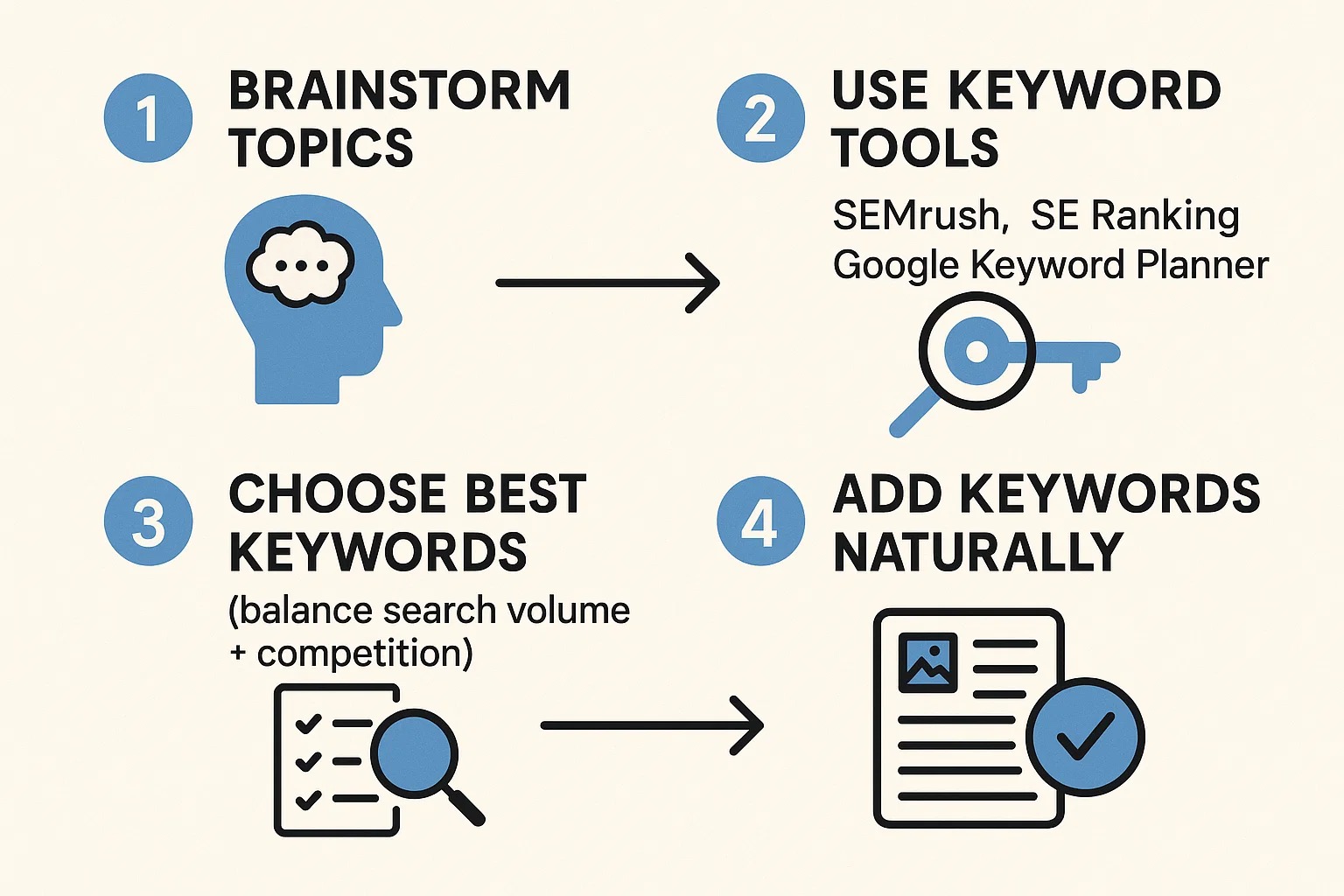
Keyword research is the process of finding the best keywords to use in your blog posts. Here’s how it works in simple terms:
Brainstorm: Think about the topics you want to write about. What are people searching for that is related to your content?
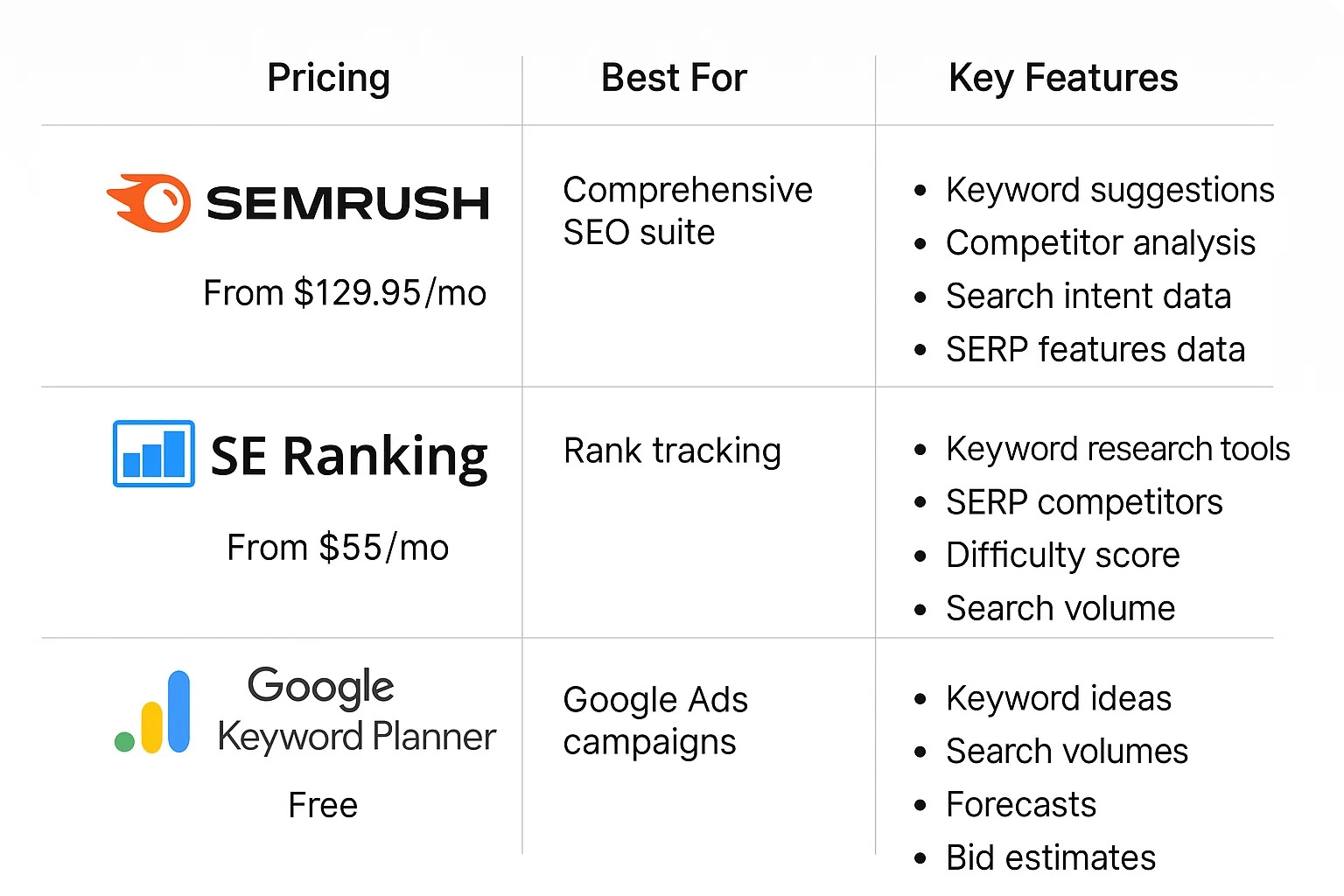
Use a Keyword Tool: This is where keyword research tools come in. Tools like SEMrush, SE Ranking, and Google Keyword Planner help you discover which keywords are popular, how difficult they are to rank for, and how many people are searching for them.
Choose the Best Keywords: Once you’ve found a list of possible keywords, pick the ones that have a good balance of search volume (how many people search for them) and competition (how many other websites are trying to rank for them).
Optimize Your Blog Posts: After choosing your keywords, you need to include them naturally in your blog post. But don’t overdo it. The key is to create high-quality, useful content for your readers.
Using Keyword Tools - A Beginner’s Guide
Let’s take a look at some of the most popular keyword research tools and how you can use them to find the best keywords for your blog.
1. SEMrush: Keyword Research Made Simple
SEMrush is a powerful tool used by bloggers and marketers to find the best keywords for their content. Here’s how you can use SEMrush for keyword research:
Step 1: Go to the SEMrush website and log in (you’ll need to create an account).
Step 2: Use the Keyword Magic Tool to search for keywords. Just type a word or phrase related to your blog, and SEMrush will give you a list of related keywords, their search volume, and their difficulty level.
Step 3: Look for keywords that have high search volume (meaning many people are searching for them) but relatively low competition (meaning fewer websites are targeting them).
Step 4: Choose keywords that are highly relevant to your blog and match the content you’re writing about.
SEMrush is great for seeing how competitive a keyword is, which can help you choose keywords that are easier to rank for.
2. SE Ranking: A Great Tool for Beginners
SE Ranking is another tool that’s easy to use, especially for beginners. Here’s how you can use it for keyword research:
Step 1: Sign up for an account and log in to SE Ranking.
Step 2: Use the Keyword Research Tool to search for relevant keywords for your blog.
Step 3: SE Ranking will show you keywords with their search volume, competition level, and trend analysis (whether the keyword is becoming more popular or not).
Step 4: Pick keywords with a moderate to low competition level. These are the keywords that will give you the best chance to rank on Google.
SE Ranking also provides an easy-to-understand SEO difficulty score, which helps you pick the best keywords for your blog.
3. Google Keyword Planner: The Free Keyword Tool
Google Keyword Planner is a free tool that’s available through Google Ads. It’s a great place to start for beginners because it’s free and reliable. Here’s how to use it:
Step 1: Sign in to Google Ads and open the Keyword Planner tool.
Step 2: Type in a keyword or phrase related to your blog. For example, if you have a blog about cooking, you can type “easy dinner recipes.”
Step 3: Google Keyword Planner will give you keyword suggestions, along with data on search volume and competition.
Step 4: Choose keywords that are relevant to your blog, and focus on those with decent search volume but lower competition.
Google Keyword Planner is perfect for beginners who want a simple and free tool to help them get started with keyword research.
Best Practices for Using Keywords in Your Blog
Once you’ve chosen your keywords, it’s time to use them in your blog posts. Here are some best practices for using keywords effectively:
Use Keywords Naturally: Don’t force keywords into your content. Use them naturally in your writing to keep the content engaging and readable.
Place Keywords in Key Areas: Include your main keyword in the title, meta description, URL, and headings. This helps search engines understand your content better.
Avoid Keyword Stuffing: Don’t repeat your keywords too many times in a post. This can harm your rankings. Instead, focus on creating high-quality content that’s useful for your readers.
Use Related Keywords: Use variations and LSI keywords (Latent Semantic Indexing keywords). These are related terms that help add context to your post.
Tracking Keyword Performance
After you’ve published your blog post, it’s important to track how your keywords are performing. Use tools like Google Analytics and Google Search Console to track how many people are visiting your blog, which keywords are bringing them there, and how well your content is ranking.
Google Analytics: This tool helps you track traffic to your blog and see which keywords are driving the most visitors.
Google Search Console: It shows you the performance of your blog in Google search results, including the search queries that bring people to your site and your average click-through rate (CTR).
Conclusion
Finding the right keywords and using them effectively is one of the most important things you can do for your blog’s SEO. Tools like SEMrush, SE Ranking, and Google Keyword Planner make keyword research easy, even for beginners. By following the steps outlined in this article and focusing on relevant, low-competition keywords, you’ll be able to optimize your blog for search engines and start driving more organic traffic.
Remember, keyword research is an ongoing process. As trends change and new topics emerge, keep refining your keyword strategy to ensure your blog stays visible and relevant in search engine results. Happy blogging!