
What is Guest Posting? A Complete Beginner’s Guide
Guest posting is one of the most powerful strategies for growing your blog, increasing your website’s visibility, and building your authority in any niche. But...

What is Guest Posting?
Guest posting (or guest blogging) means writing an article for someone else’s website or blog.
You, as a guest, write a blog post.
You publish it on another website, not your own.
In exchange, you often get a link back to your own website. This link helps people find your website.
Simple Example:
Imagine you write a blog post about cooking tips and share it on a popular cooking blog. At the end of your post, there’s a link to your own website that sells cooking tools. This way, readers will come to your site.
Why Guest Posting is Important
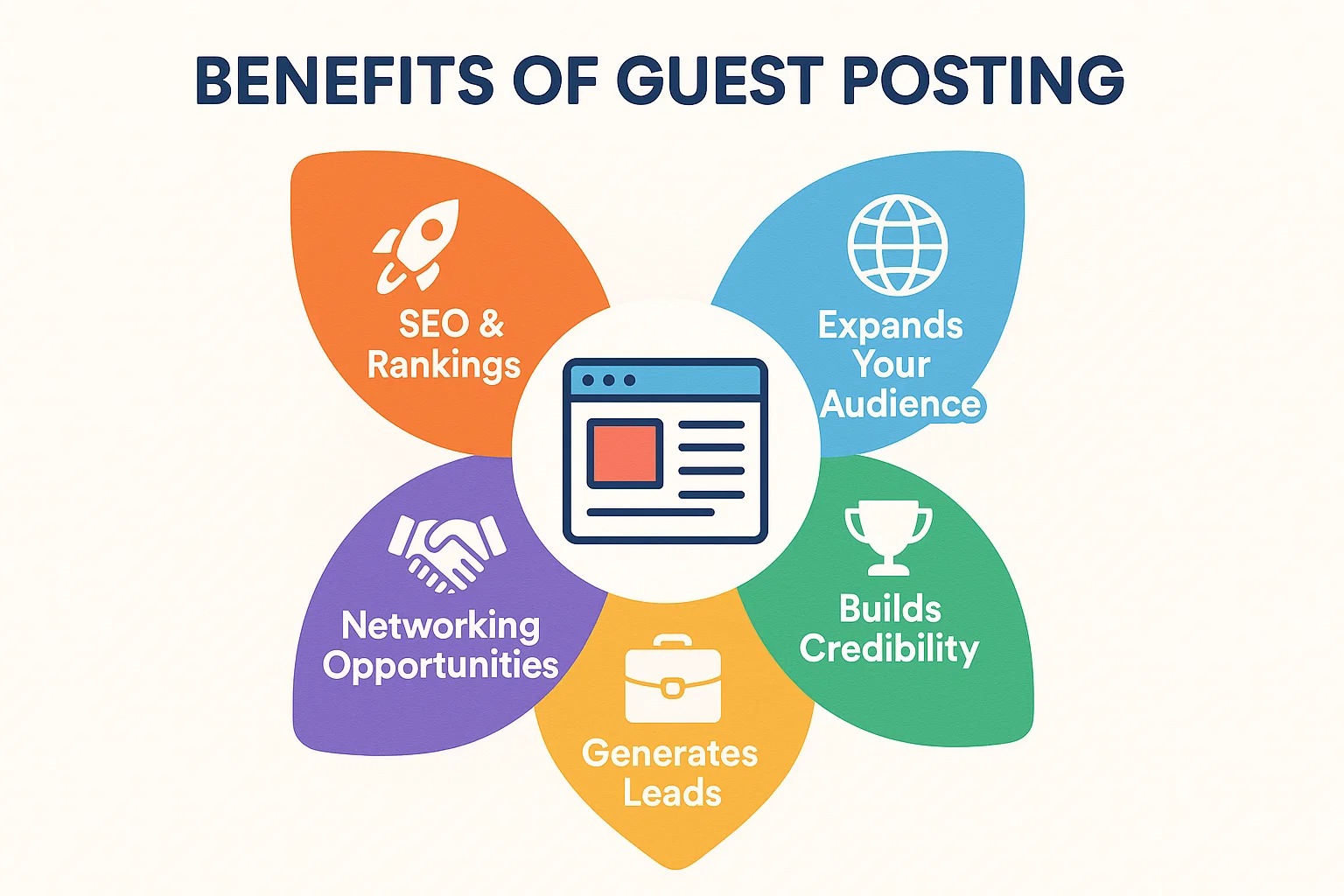
Guest posting is a powerful way to grow your website and online presence. First, it helps improve your website’s authority. When high-quality websites link to your content, search engines see your site as trustworthy and valuable. These links, called backlinks, are like votes of confidence. The more high-quality links you have, the better your chances of ranking higher in search results.
Second, guest posting introduces your content to a new audience. People who visit the host website might not have heard of you before. By sharing your expertise, you gain exposure to potential readers or customers who may follow your website or social media.
Another important benefit is that guest posting helps build your credibility. When you contribute valuable content to established websites, readers see you as an expert in your field. This trust is very important, especially if you want people to rely on your advice, buy your products, or engage with your content.
Finally, guest posting can help you connect with other bloggers and website owners. These relationships can open doors to future collaborations, guest posts, or even business partnerships.
How Guest Posting Works
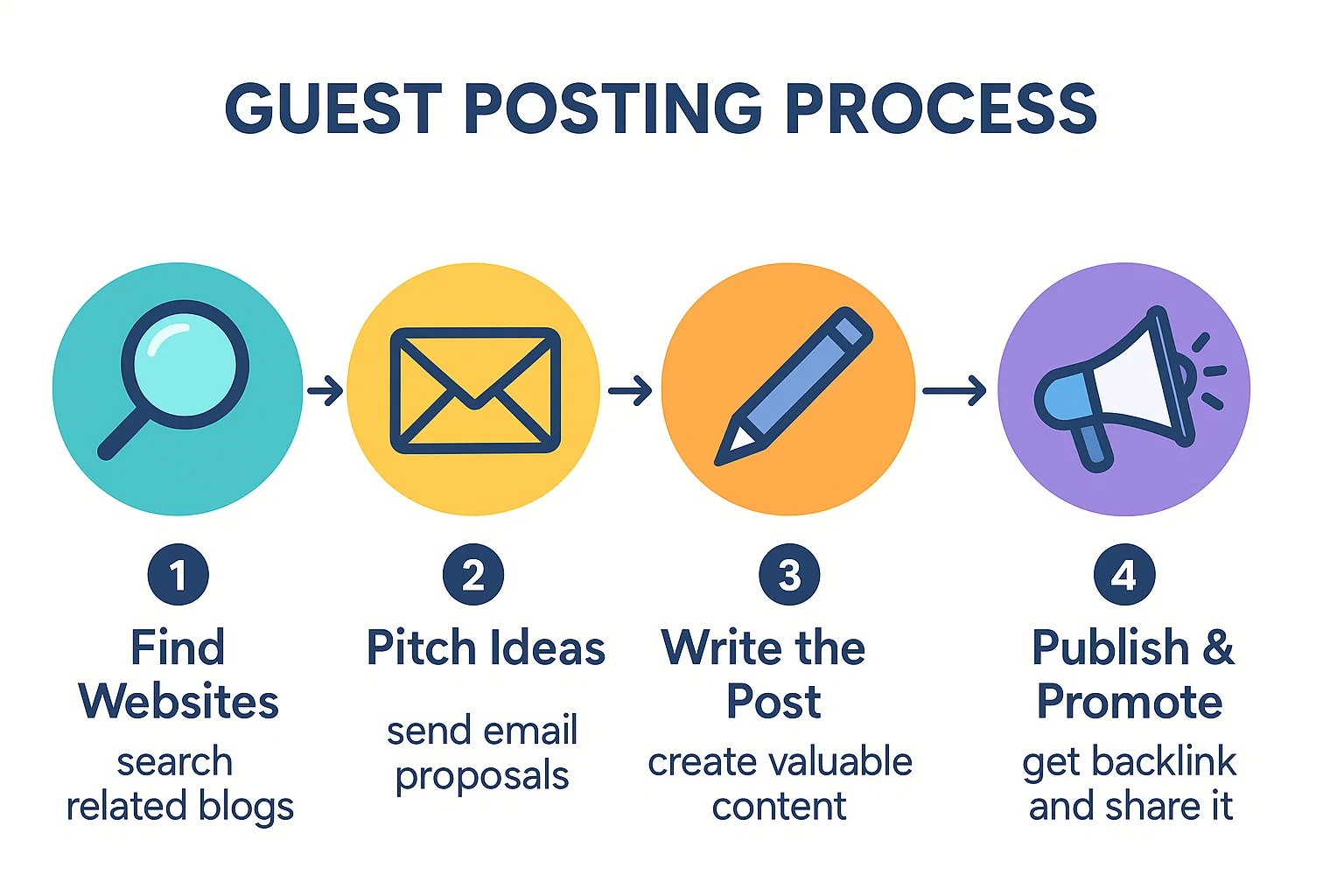
Guest posting follows a simple process, even if it sounds complicated at first. The first step is to find the right websites. You should look for blogs or websites that are related to your topic or niche and accept guest contributions.
Once you find a suitable website, the next step is to pitch your idea. Pitching means sending an email or filling out a form to suggest your topic. In your pitch, explain what your article will cover, why it is useful, and how it benefits the website’s audience. A clear, polite pitch makes it more likely that your idea will be accepted.
After your pitch is approved, it’s time to write the guest post. Your article should be well-written, informative, and interesting. It should provide value to the readers rather than just promoting your own website. Follow the host website’s rules for word count, style, formatting, and links.
Finally, once the post is published, you should promote it yourself. Share it on social media, your website, or with your friends and followers. This helps more people see your work and drives traffic back to your website through the link included in your guest post.
Benefits of Guest Posting
1. Improve Your Website’s Ranking (SEO)
Google loves backlinks. When other websites link to your site, Google sees your site as more trustworthy. This can help you rank higher in search results.
2. Grow Your Audience
By writing for other blogs, you get your content in front of people who might never have found you. They may visit your website and become regular readers.
3. Show Your Expertise
Writing guest posts shows that you are an expert in your field. This helps people trust you more.
4. Build Relationships
Guest posting is a way to connect with other bloggers. These relationships can help you collaborate on future projects or even become business partners.
Finding Guest Posting Opportunities
You can use Google to search for blogs that accept guest posts. Try typing:
“Write for us” + [your niche]
“Guest post guidelines” + [your niche]
“Submit a guest post” + [your niche]
This will show you websites that accept guest posts.
2. Use Directories
There are websites that list places where you can submit guest posts. Examples include:
GuestPostTracker
PostJoint
Writing a Guest Post That Gets Accepted
To write a guest post that is accepted, you need to understand the audience and the host website. Spend time reading the website’s content to see what their readers like and what problems they are trying to solve.
Always follow the guest posting guidelines. These can include word count, formatting rules, acceptable topics, and the number of links you can include. Following the rules shows professionalism and increases your chances of being accepted.
Your content should be high-quality and valuable. Avoid overly promotional content. Focus on educating, helping, or entertaining the audience. Well-researched, unique, and engaging content always performs better.
When sending your pitch, be polite and professional. Introduce yourself, explain the value of your post, and include examples of your previous work if possible. Personalized emails always work better than generic messages.
What Makes a Good Guest Post?
A good guest post is easy to read, useful, and well-organized. Use short paragraphs, clear headings, and bullet points to make it simple for readers to follow. Include relevant images, charts, or infographics to make your article more interesting. Links to other resources or your own website should be natural and add value rather than being forced.
Ultimately, a great guest post leaves the reader feeling informed, helped, or inspired. It should make them want to come back for more.
Final Thoughts
Guest posting is a simple but powerful way to grow your website, reach new audiences, and build your credibility online. It helps improve your SEO, expand your reach, and connect you with other bloggers and website owners. For students starting from scratch, the key is to take it step by step. Start by finding websites that accept guest posts, pitch your ideas politely, write high-quality content, and promote your posts. Over time, guest posting can become a regular part of your content strategy, helping you grow your online presence and succeed in your niche.
