
Why SEO and Backlinks Matter for Beginners
As a beginner in the world of blogging and digital marketing, you may have heard terms like SEO and backlinks floating around. You may also have wondered, "Why...

As a beginner in the world of blogging and digital marketing, you may have heard terms like SEO and backlinks floating around. You may also have wondered, "Why do they matter?" Well, don’t worry—this guide will break down these concepts in simple terms, helping you understand how SEO and backlinks play a crucial role in your website's success.
1. What is SEO (Search Engine Optimization)?
Search Engine Optimization, or SEO, is the process of optimizing your website so that search engines (like Google) can understand it and rank it higher in search results. The higher your website ranks, the more likely it is that people will find it when they search for something related to your content.
SEO is essential because search engines are often the main way people find websites. Without SEO, your website could be hidden far behind millions of other search results. And even if you have great content, if your SEO isn’t on point, no one will see it.
Why Does SEO Matter for Beginners?
When you're just starting out, it’s likely that your website is not yet well-known. SEO helps get your website in front of people who are searching for the topics you cover. Think of SEO as a tool that helps you attract traffic to your website.
Here are some key things that SEO helps with:
Visibility: The higher you rank in search results, the more likely you are to be seen by people.
Traffic: Good SEO brings more visitors to your site, which can lead to more customers, followers, or readers.
Credibility: Websites that rank high on Google are generally perceived as trustworthy and authoritative.
2. What Are Backlinks?
Backlinks are links from other websites that point to your website. Imagine you’re writing an article, and another website links to it. That’s a backlink. Backlinks are one of the most important elements of SEO.
Why Do Backlinks Matter?
Backlinks are like votes of confidence. When a reputable website links to your website, it’s essentially saying, "This content is good, and you should check it out." Search engines like Google see these backlinks and use them as an indication that your content is valuable and relevant.
Backlinks also help your site in several ways:
Improved Ranking: Google uses backlinks as a ranking factor. The more high-quality backlinks you have, the higher you’ll rank on search results.
Increased Referral Traffic: Backlinks drive referral traffic from the website linking to yours. If someone clicks on the backlink, they visit your website, leading to more exposure.
Credibility & Authority: Websites with high-quality backlinks from trusted sites are considered more credible and authoritative by search engines.
3. How SEO and Backlinks Work Together
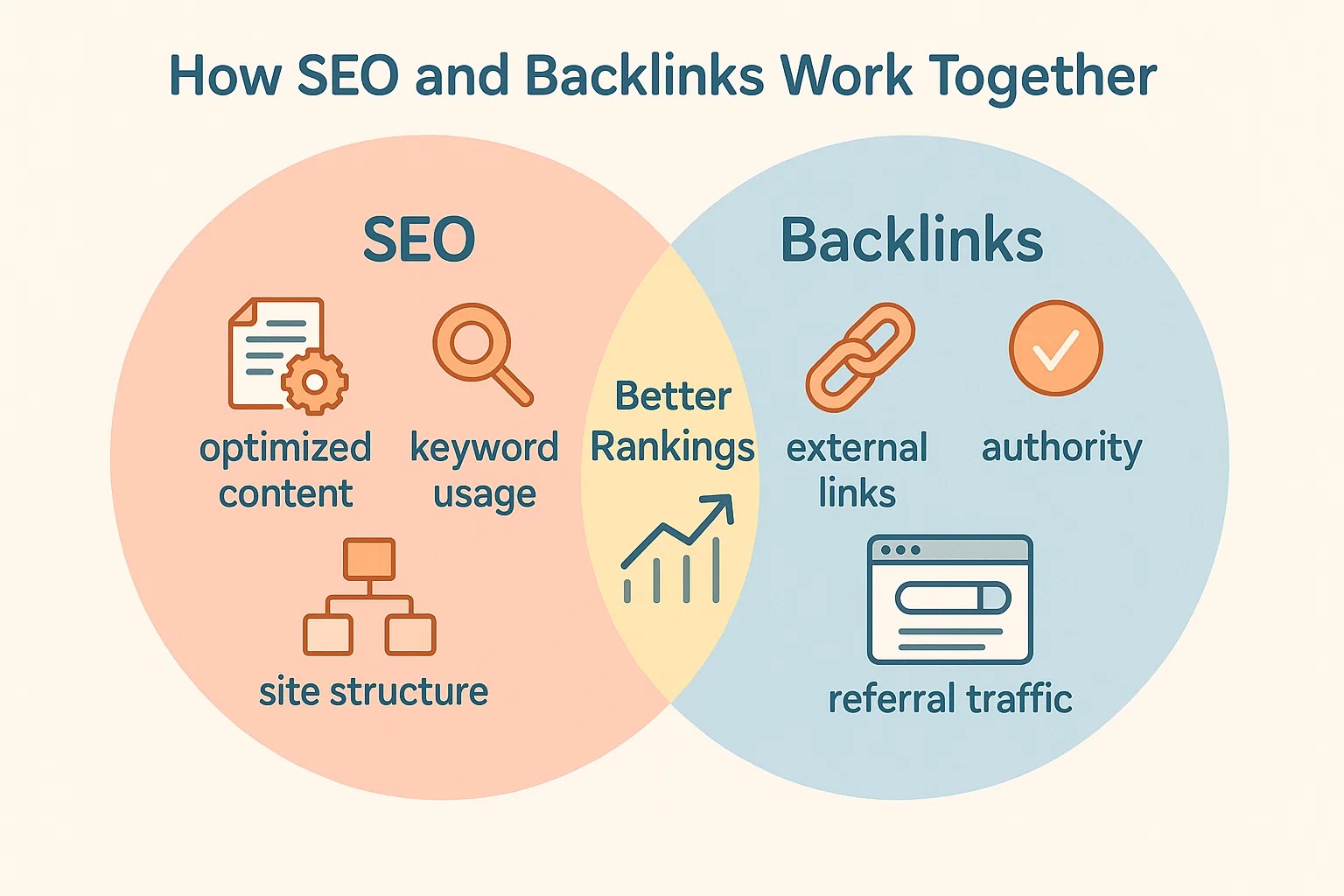
While SEO is about making sure your website is structured in a way that search engines understand, backlinks play a big part in boosting your SEO. Here's how they work together:
SEO Without Backlinks: If your website has good content, but no backlinks, search engines may not see your site as highly authoritative. Your website might rank well for certain keywords, but without backlinks, it may struggle to reach the top positions on search engine result pages (SERPs).
Backlinks Without SEO: Even if you have a lot of backlinks, they won't help much if your website is poorly structured or lacks quality content. Your website needs to be SEO-friendly to make the most of those backlinks.
In short, backlinks help your website gain authority, and SEO ensures that your site is structured to rank well and be visible to search engines.
4. The Importance of High-Quality Backlinks
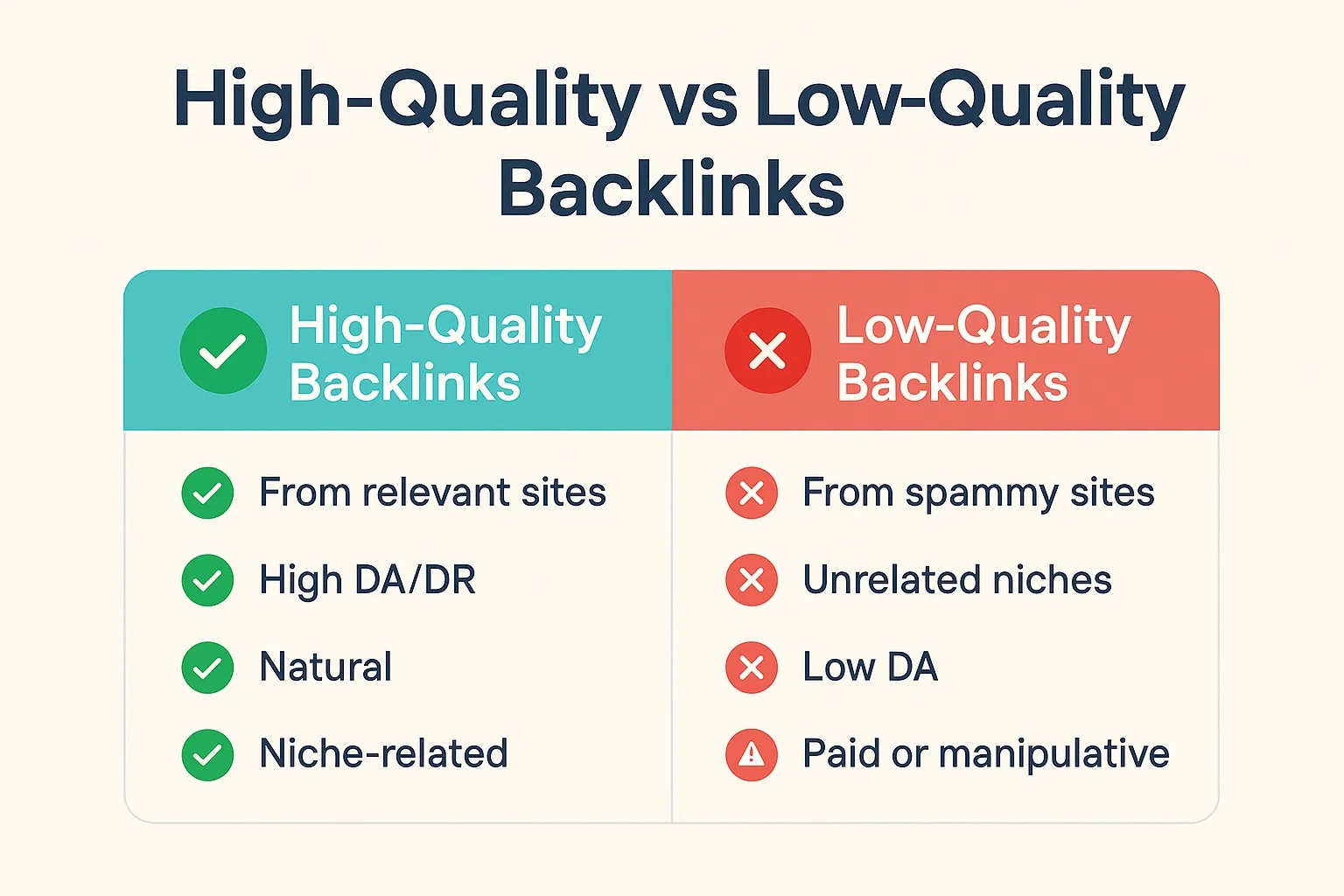
Not all backlinks are equal. The quality of the website linking to yours matters a lot. Here’s how you can differentiate between high-quality and low-quality backlinks:
High-Quality Backlinks:
Come from relevant, authoritative websites in your niche.
Are natural (not paid for or manipulative).
Are from websites with high Domain Authority (DA) or Domain Rating (DR).
These backlinks will help you rank higher and bring relevant traffic to your site.
Low-Quality Backlinks:
Come from websites with low DA or DR.
May come from unrelated or spammy websites.
Are paid links or links obtained through questionable practices.
Low-quality backlinks can actually hurt your SEO and result in penalties from Google, so it’s crucial to focus on quality over quantity.
5. How to Start Getting Backlinks
As a beginner, it might seem challenging to get backlinks. But don't worry! Here are a few beginner-friendly ways to start earning backlinks:
1. Create High-Quality Content
One of the best ways to get backlinks is to create valuable, shareable content. If your content is informative, entertaining, or solves a problem, other websites will be more likely to link to it.
2. Guest Posting
Guest posting is a great way to get backlinks while also building your audience. By writing guest posts for other websites in your niche, you can earn backlinks and expand your reach.
3. Participate in Communities and Forums
Participate in online communities like Reddit or Quora and share helpful content. You can often add links to your answers or posts, which may result in more backlinks over time.
4. Outreach
Reach out to other website owners or bloggers and offer to write a guest post or contribute to their site in exchange for a backlink. Be sure to offer value in your proposal, such as high-quality, SEO-optimized content.
5. Social Media
Promote your content on social media platforms like Facebook, Instagram, or LinkedIn. Although social media links are nofollow (they don’t pass SEO authority), they can still help increase your exposure and lead to natural backlinks.
6. SEO Strategies to Improve Your Backlink Profile
Backlinks alone aren’t enough. You need a solid SEO strategy to make the most of them. Here are some tips to improve your overall SEO:
1. Keyword Research
Before writing content or pitching guest posts, perform keyword research to find the right terms and phrases people are searching for. Tools like Google Keyword Planner and Ubersuggest can help you discover keywords with high search volume and low competition.
2. Optimize On-Page SEO
Make sure your website’s content is optimized for the keywords you’re targeting. This includes:
Using keywords in the title and headers.
Including keywords in image alt text.
Optimizing meta descriptions and URLs.
Using internal linking to help search engines crawl your site.
3. Technical SEO
Technical SEO ensures that your website is structured in a way that search engines can easily crawl and index your pages. This includes:
Ensuring fast page load times.
Mobile optimization for mobile users.
Creating an XML sitemap to guide search engines.
Ensuring your site has HTTPS for security.
4. Monitor Backlinks
Use tools like Ahrefs or SEMrush to monitor your backlinks. These tools will show you who is linking to you, how many backlinks you have, and whether any links are harmful to your SEO.
7. The Power of Guest Posting and Backlinks
Guest posting is a win-win strategy for both the publisher and the guest blogger. By writing valuable content for another blog and including a backlink to your website, you get to benefit from their audience and gain SEO authority at the same time. For beginners, this is one of the easiest ways to get started with building your backlink profile.
Here are some ways guest posting helps with backlinks:
Exposure to a new audience: Your guest post will reach a new audience that might not have found you otherwise.
Valuable backlinks: The website hosting your guest post will usually link back to your website, improving your SEO.
Establishing authority: Guest posting on reputable websites can establish you as an authority in your niche.
Conclusion
Understanding SEO and backlinks is essential for anyone who wants to succeed in the world of blogging and online marketing. As a beginner, it’s important to focus on creating valuable content and acquiring high-quality backlinks from reputable websites. By following the tips in this guide, you’ll start seeing your website rise in search engine rankings, bringing more traffic and opportunities your way.