What is E-E-A-T in SEO? Complete Guide to Building Authority, Trust & Rankings
What is E-E-A-T in SEO? Learn how Experience, Expertise, Authoritativeness, and Trustworthiness impact Google rankings, and discover proven strategies to build authority, trust, and credibility for better SEO performance.
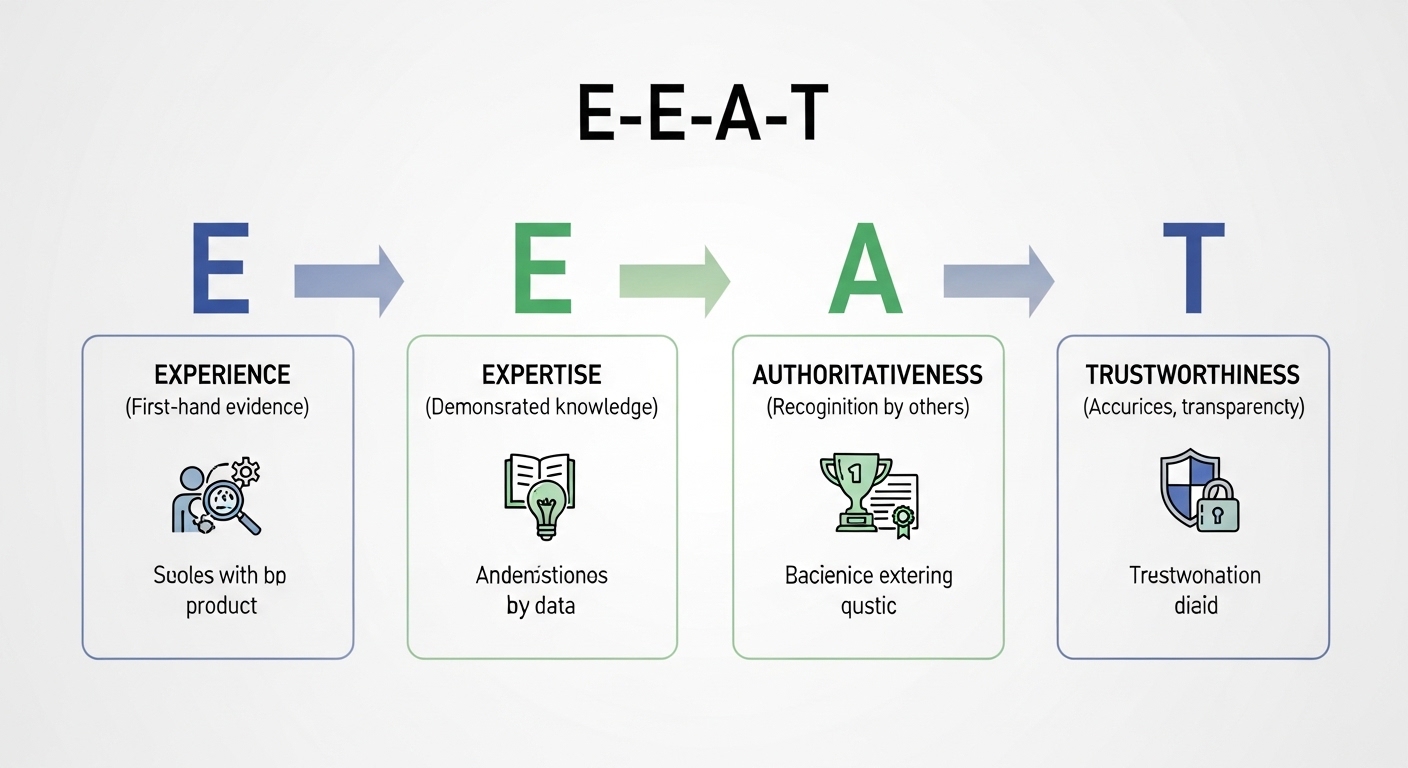
E-E-A-T — Experience, Expertise,
Authoritativeness, and Trustworthiness — is not a ranking algorithm or a score
you can see in Search Console. It is a framework used by Google's Search
Quality Evaluators to assess the quality of search results, and it increasingly
influences how Google's machine learning systems weight content signals during
ranking. Getting E-E-A-T right is less about checking boxes and more about
genuinely building the kind of authoritative, trustworthy online presence that
would impress a knowledgeable expert in your field.
This guide breaks down each E-E-A-T dimension, explains what Google's evaluators actually look for, and gives you concrete strategies for building verifiable signals across every dimension.
What is E-E-A-T in SEO?
E-E-A-T in SEO stands for Experience, Expertise, Authoritativeness, and Trustworthiness. It is a framework used by Google to evaluate the credibility and quality of content across the web. While it is not a direct ranking factor, it plays a crucial role in determining which content deserves higher visibility in search results.
Google uses E-E-A-T signals to ensure users are getting accurate, reliable, and helpful information. Websites that demonstrate strong E-E-A-T are more likely to rank well, especially in competitive and sensitive niches.
Understanding what is E-E-A-T in SEO is essential for anyone looking to build long-term organic traffic and authority in their industry.
The Four Dimensions of E-E-A-T
Experience — The Newest Addition
Experience was added to the original E-A-T framework in December 2022. It refers to first-hand, real-world experience with the topic being covered. A product review written by someone who has actually used the product for six months has Experience. A travel guide written by someone who has visited the destination has Experience. A "best practices" guide written by someone who has implemented those practices in real client situations has Experience.
Experience is the hardest dimension to fake and therefore the most valuable to build. It manifests as: specific examples and case studies from real work, original data and research, photos and screenshots from actual use, personal anecdotes that reveal genuine familiarity with edge cases and real-world constraints, and content that addresses practical problems that only arise when you actually do the thing.
Expertise — Demonstrated Knowledge Depth
Expertise is demonstrated through the depth, accuracy, and nuance of your content. An expert-level article on a technical subject is comprehensive without being vague, accurate in its specific claims, clear about the limits of what is known, and consistent with consensus views in the field (or explicitly explains why it deviates from consensus). For formally credentialed fields (medicine, law, finance), expertise signals are stronger when tied to verifiable credentials. For informal expertise (SEO, marketing, software), expertise is demonstrated through the quality and specificity of the content itself and through third-party recognitionAuthoritativeness — Recognition by Others
Authority is an external signal — it is conferred by others, not claimed by yourself. The strongest authority signals are: backlinks from recognized authoritative sources in your field, brand mentions on industry publications (with or without a link), authorship credits on major platforms and publications, citations of your content or data by other authoritative sources, and engagement signals that indicate your content is considered a primary reference in your field.
You cannot manufacture authoritativeness by saying "we are the leading authority on X." You build it by producing content that others reference, by appearing in recognized publications, and by associating your brand with credentialed individuals and organizations.
Trustworthiness — The Foundation of All E-E-A-T
Google's quality evaluators are explicitly instructed that Trustworthiness is the most important of the four dimensions. A site that is technically expert but untrustworthy — because it makes false claims, hides its commercial intent, presents ads as editorial content, or has a poor track record of accuracy — cannot be rated highly. Trustworthiness encompasses: factual accuracy, transparent authorship and site ownership, honest disclosure of commercial relationships, clear contact information, accurate and up-to-date content, and consistent alignment between stated values and actual behavior.
Building Verifiable Author Entity Signals
One of the highest-leverage E-E-A-T improvements available to most sites is investing in author entity development — creating machine-readable, verifiable signals that tell Google who wrote the content and why they are qualified to do so.
Author Bio Pages
Every content author should have a dedicated author bio page on your site. This page should include: full name, job title and organization, professional credentials and certifications, publications and media appearances, a link to their LinkedIn profile and other professional profiles, a brief description of their relevant experience in the field, and a photo (which helps Google associate the author entity across platforms).
The author bio page should be linked from every article that person has written, using the rel="author" attribute where possible. This creates a crawlable entity association between the author and their content.
Person Schema for Authors
Implement Person schema for each author, nested within the Article schema of their content. Key properties: name, url (their bio page), jobTitle, affiliation (Organization entity of your company), sameAs (LinkedIn, Twitter, Google Scholar, ORCID, Wikipedia if applicable), and knowsAbout (the topic areas they cover). This schema creates an explicit entity relationship between the author, your organization, and the topics they write about.
Building Site-Level Trust SignalsAbout Page Quality
Google quality evaluators read About pages carefully. A high-quality About page includes: the mission or purpose of the site, the organization's founding story and background, the team behind the site (with links to individual profiles), contact information (email, phone, physical address where relevant), and any relevant certifications, memberships, or awards. The goal is for a skeptical, intelligent reader to come away from the About page feeling confident that this is a legitimate, transparent organization.
Contact and Transparency Information
Sites that are difficult to contact are scored poorly for trustworthiness. Ensure: a Contact page is easily findable from the main navigation, multiple contact methods are available (email, phone, form), response time expectations are set, and for e-commerce or service businesses, a physical address and legal business name are visible.
Content Accuracy and Freshness
Every article should display: a publication date, a last-reviewed/updated date (more important than publication date for accuracy signals), a byline linked to the author bio page, and — for topics where expertise credentials matter — a section or sidebar noting the author's relevant qualifications. Systematically review and update high-traffic content annually to maintain accuracy signals.
Brand Mention and Co-Citation Strategy
Brand mentions — instances where your brand name appears in content on other authoritative sites, even without a hyperlink — are increasingly recognized as authority signals by Google. Building a brand mention strategy runs parallel to your link building strategy and in some cases delivers stronger E-E-A-T impact.
Tactics for earning brand mentions: contribute expert quotes to industry publications and PR outlets (HARO, Qwoted, or direct journalist relationships), publish original research and data that others cite, create tools or resources that become reference points in your industry, build a speaker profile for industry conferences and webinars, and maintain an active, expert presence in industry communities (LinkedIn, relevant subreddits, Slack groups, forums).
YMYL Topics: The Highest E-E-A-T Standard
YMYL — Your Money or Your Life — refers to topic areas where inaccurate information could significantly harm readers: health and medical advice, financial guidance, legal information, safety content, and news about major public policy issues. Google applies its strictest quality standards to YMYL content because the stakes of getting it wrong are highest.
If your site covers YMYL topics, your E-E-A-T strategy must include: expert authorship (ideally credentialed professionals — MD, JD, CPA, etc.), medical or legal review processes documented on the page, clear distinction between general information and professional advice, a visible editorial policy explaining how content is reviewed for accuracy, and regular content audits to identify and update outdated claims.
Sites in competitive YMYL niches (health supplements, financial products, legal services) that do not invest in genuine E-E-A-T signals will consistently be outranked by sites that do — because Google's algorithm specifically deprioritizes low-E-E-A-T content in these categories, regardless of other optimization factors.
|
✅ Key Takeaways |
|
→ Trustworthiness is the most important E-E-A-T dimension — Google's guidelines explicitly state that an untrustworthy site cannot be rated highly even with strong expertise signals. |
|
→ Author entity markup (Person schema with sameAs links to LinkedIn, Google Scholar, and major publications) creates machine-readable expertise signals Google can verify. |
|
→ First-hand experience signals (photos, case studies, specific data from real-world use) are the strongest differentiators — they cannot be copied or manufactured. |
|
→ Brand mentions on authoritative, relevant sites are E-E-A-T signals even without a hyperlink — build a brand mention strategy alongside your link building strategy. |
|
→ YMYL (Your Money Your Life) topics face the strictest E-E-A-T scrutiny — health, finance, legal, and safety content requires the highest levels of credentialing and transparency. |
|
|
|
🔧 Practice with RankAudit + RankOps Run a full E-E-A-T audit using RankAudit — it scores your site across 47 trust and authority signals including author credentials, About page quality, contact information, schema implementation, and brand mention co-citation patterns. Use the audit report as your E-E-A-T improvement roadmap. |